
Nisga’a official says most hurdles for Ksi Lisims have been cleared
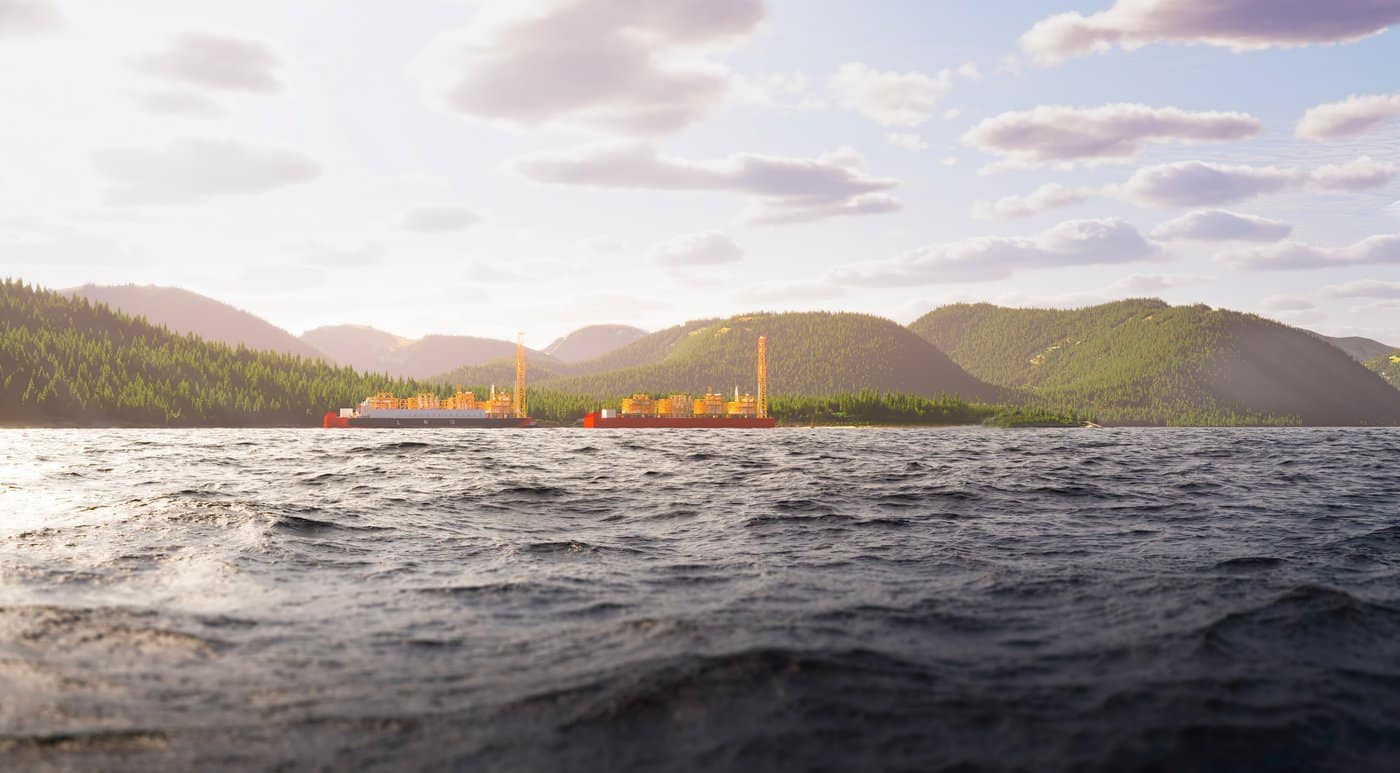
CALGARY — The secretary-treasurer of the Nisga’a Nation in northern British Columbia says there remain few obstacles to a final go-ahead decision for the Ksi Lisims liquefied natural gas plant and export terminal.
“I think we’ve basically cleared almost all hurdles for this project,” Charles Morven told reporters on the sidelines of the Global Energy Show in Calgary on Tuesday.
The $10-billion Ksi Lisims project would be on Nisga’a land in the northwest corner of B.C. near the Alaska border. The lead developer is Houston-based Western LNG; Rockies LNG, a consortium of Canadian natural gas producers, is also part of the plan.
Morven said he sees his community’s participation in LNG as a way to achieve more autonomy.
“That’s what we’re working toward, to build our own financial capital and maybe, somewhere along the line, be able to finance smaller projects on their own without having to wait for other people to do things for us,” he said.
In recent weeks, Ksi Lisims has signed preliminary supply agreements with two German utilities. It also announced three new benefit agreements with other First Nations in the region, two of which have dropped legal challenges against the project’s federal approval.
“We hope it’s a clear path for Canadians to understand that it’s Indigenous people that aren’t standing in front of you, or aren’t standing opposed to you, aren’t standing in a different way,” said Andrew Robinson, chief executive officer of the Nisga’a Nation, during a panel discussion at the conference.
“Sometimes the narrative is always what kills the discussion that is occurring.”
Though the lawsuits from the Metlakatla and Lax Kw’alaams have been withdrawn, one Gitxsan leader vowed to continue fighting B.C.’s approval of the Prince Rupert Gas Transmission pipeline, which would feed into Ksi Lisims.
“It will have irreversible consequences on our culture, identity and livelihood as Gitxsan people,” Hereditary Chief Charlie Wright with the Gitxsan house Luutkudziiwus said in a written statement.
“The province has never properly consulted our Wilp (house) — and we’re prepared to take this issue to the Supreme Court of Canada.”
Several hundred kilometres south along the coast, in Squamish, B.C., the Woodfibre project is about 65 per cent complete, CEO Luke Schauerte said in an interview on the sidelines of the conference. Startup is slated for next year.
Woodfibre is 70 per cent owned by Pacific Energy Corp., which is a unit of Singapore-based RGE group of companies. Enbridge Inc. holds the remaining stake.
Woodfibre’s gas export capacity has all been spoken for by BP, said Schauerte.
The Ksi Lisims agreements with German firms Securing Energy for Europe late last month and Uniper earlier this week send a positive signal, he said.
“The LNG market is technical, it’s sophisticated, it is a complex global trading market. So it provides for things like swaps and offtake agreements that will facilitate that,” he said.
Swap deals — which connect buyers and sellers on opposite ends of the globe — are more common now than they were just a few years ago, said Schauerte.
“I believe that the work that’s being done by the federal government to market Canada as a reliable provider and a secure provider has been coming to fruition now, so I look forward to more of that happening.”
Woodfibre says it is the first industrial project to recognize a non-treaty Indigenous government, the Squamish Nation, as a full environmental regulator.
“I do see Canadian LNG as Indigenous LNG,” Schauerte said.
The only LNG facility currently up and running is the LNG Canada facility in Kitimat, B.C. Cargoes began leaving from the terminal to Asia almost a year ago.
The partners in LNG Canada — Shell and four Asian state-owned firms — are contemplating an expansion that would double the plant’s capacity, with a final investment decision expected by year-end.
Ryan Hickman, Shell’s manager of global gas fundamentals based in Singapore, told the conference that Asian customers are keen to add Canadian gas to their portfolio because it’s sustainable, reliable and affordable.
“This isn’t something that we necessarily are out pushing,” he said. “A lot of buyers are coming to us.”
This report by The Canadian Press was first published June 10, 2026.
Lauren Krugel, The Canadian Press
Stay connected with local news
Make us your
home page
Authors