Community-driven initiative to help suicide prevention capacity in Fort St. John, Peace Region
The Foundry Fort St. John, along with other community partners are working towards youth suicide prevention capacity in Fort St. John and the Peace River region.
FORT ST. JOHN, B.C. — A community-driven initiative is “strengthening” youth suicide prevention capacity in Fort St. John and the Peace River region.
According to a media release from the University of Northern British Columbia’s (UNBC) School of Social Work on May 12th, the university is working with community partners to build suicide prevention capacity and foster stronger, more connected support.
The release said in northern and rural communities, access to specialized mental health services can be limited due to geography, workforce shortages and distance between communities.
It said that community-based knowledge and confidence in responding to crises are “critically important.”
This comes after two youths from Fort St. John died over the 2025-2026 holiday break.
Foundry Fort St. John’s community development and project lead, Asuncion Sta Maria, said the foundry was brought into important conversations in January alongside service providers due to a growing need for in-person support and suicide prevention training.
“In this case, multiple organizations – including service providers, educational institutions and community partners – came together following difficult events in the community to pool their expertise, resources and capacity,” she explained. “Each group contributed something unique, whether it was funding, space, coordination or frontline support.”
Latest Stories
She added that collaboration was needed as it allowed the community to respond in a coordinated, meaningful and timely way.
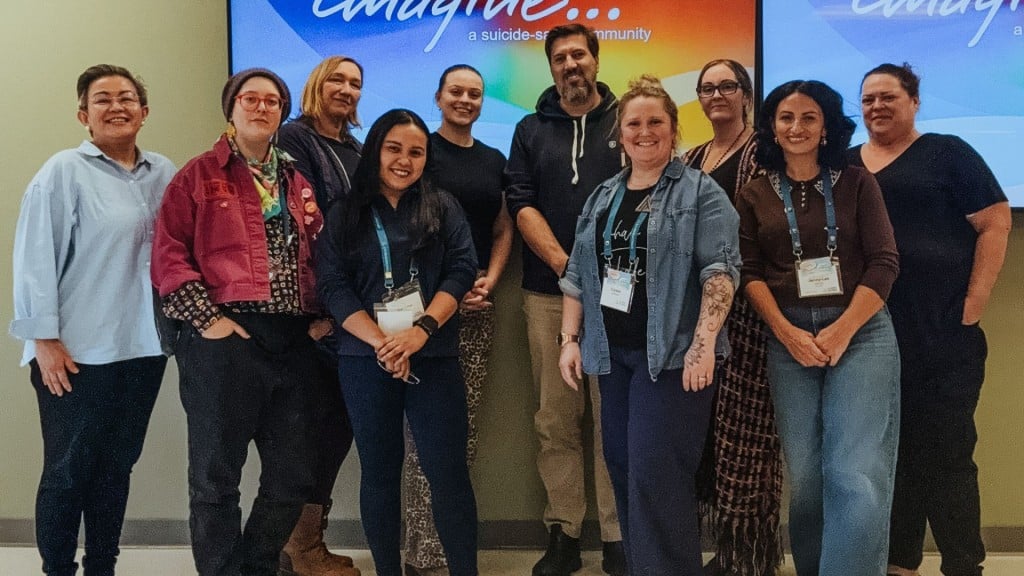
The Foundry, along with the Fort St. John Association for Community Living, Saplings Mental Health Services, Urban Systems, Northern Lights College, and the UNBC’s School of Social Work, hosted a free workshop called Living Works Applied Suicide Intervention Skills Training (ASIST), funded by Shell Canada.
During the workshop, a total of 27 participants were equipped with evidence-informed skills to recognize youth suicide risk, engage in compassionate and direct conversation and facilitate timely connections to appropriate services, the release said.
Participants included people from First Nations communities, community organizations, service providers and parents.
Dr. Tareq Hardan, UNBC School of Social Work assistant professor at the Peace River–Liard campus, said: “What stood out most about this initiative was the spirit of collective care that shaped it.”
He said that the training became a space for the community to come together, grieve, learn, reflect and strengthen its capacity to support each other during an “incredibly difficult time.”
The release said the same collaborating organizations began planning another workshop to provide foundational training on suicide alertness skills using the LivingWorks safeTALK and safeTALK Training to Trainers (T4T) programs.
During the planning process, a mass shooting happened at the Tumbler Ridge Secondary School, which the release said reinforced the importance of a collective effort that was underway in Fort St. John.
Sta Maria said: “By investing in trainings like these, we are growing local capacity where more individuals are equipped with life-saving skills, and more organizations are aligned in how they respond to mental health and suicide prevention.”
According to Sta Maria, the training reduces stigma, encourages earlier help-seeking and fosters a culture where people feel supported and connected.
She believes the long-term impact will be to build a more resilient and responsive community.
The safeTALK workshop had 20 participants, while the safeTALK Training for Trainers in March had eight participants.
Kaye Anderson-Gosselin, ASIST facilitator and local artist, said she wanted another avenue that would help the community become safer from suicide.
“Being able to offer safeTALK suicide alertness skills seemed like another tool in my toolkit, meeting a different need than the more intensive ASIST training,” she said.
The safeTALK workshop and safeTALK Training for Trainers responded to concerns raised by families, said Beverly Debolt, a child and youth services clinical manager and Indigenous child and youth mental health clinician at the Nenan Dane Zaa Deh Zona Family Services Society.
“Caregivers had expressed concerns they might not recognize signs of suicidal ideation in their children,” she said. “And I wanted to give them clear steps they could take to address this concern.”
People who enrolled for the workshop gained practical skills to recognize when someone may be struggling with thoughts of suicide and learned how to connect them with appropriate support and resources.
People who participated in the safeTALK Training for Trainers developed the facilitation skills and knowledge required to deliver safeTALK workshops within their own organizations and communities.
Reilli Petersen, a member of Foundry Fort St. John’s Youth Advisory Committee, said: “SafeTALK creates a safe space for participants to have constructive conversations about mental health and more specifically, suicide, with their peers.
“SafeTALK T4T has provided me with the skillset, knowledge and certification to participate in and facilitate meaningful work in my community as a mental health ally and advocate.”
Hardan believes the initiative’s most significant aspect is the “emphasis on sustainability through a train-the-trainer approach.”
“This approach helps ensure knowledge and capacity remain within the community and can be mobilized quickly when needed,” he said.
The release said the community-led initiative has built confidence and connection, ensuring more people feel prepared to recognize when someone is struggling and connect them with resources and support.
Sta Maria said: “Ultimately, these efforts help lay the foundation for a stronger system of care in Fort St. John.”
“One where youth, families and community members know they are not alone and that there is a network of people ready to support them.”
Hardan believes that the collaborative effort has been “inspirational” and reflects the strength of the community, shared purpose and collective care.
“While the circumstances that brought us together were deeply tragic, the response we are seeing across Fort St. John reflects something powerful: a community determined to learn, support one another and build stronger networks of care for youth and families moving forward,” he said.
The Foundry Fort St. John will be hosting another set of safeTALK community training sessions on June 12th and 13th, facilitated by eight newly trained local provisional trainers.
Community members who have expressed interest in the training will receive an email invitation to register.
For more information and updates, follow the Foundry’s Fort St. John’s Facebook page.
Stay connected with local news
Make us your
home page
Authors

Related Articles

Peace River region maintained ‘adequate’ moisture levels, according to April’s report
Agriculture and Agri-Food Canada’s agroclimate specialist said there is no significant drought in the Peace River region.
One-hectare wildfire reported north of Fort St. John
The one-hectare wildfire was reported during the afternoon of Wednesday, May 13th.