
Pouce Coupe council calls on province to protect private property
On March 11th, Pouce Coupe became the first municipality in B.C. to formally demand the provincial government protect private property following the Cowichan Tribes v. Canada ruling.
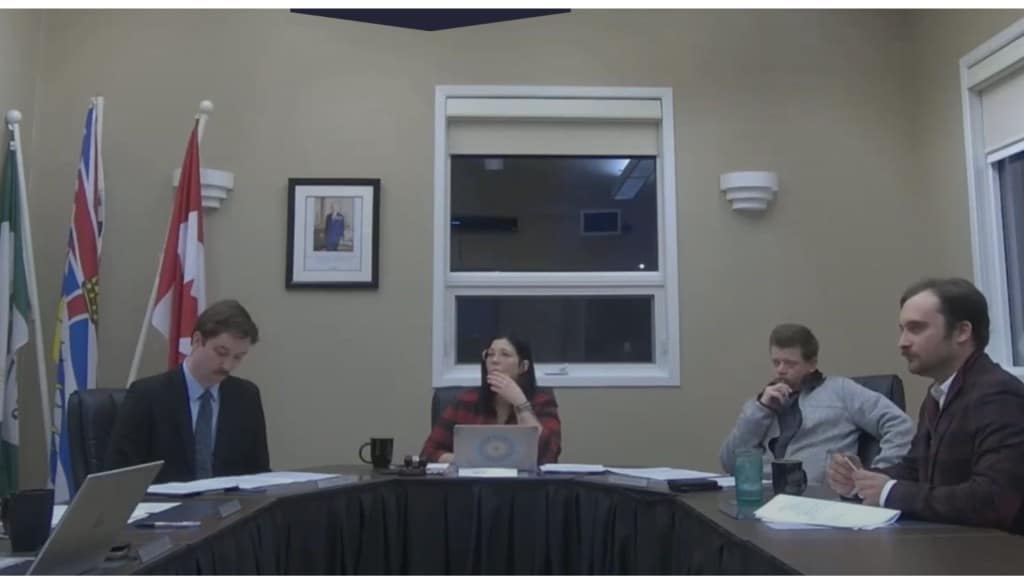
POUCE COUPE, B.C. — Pouce Coupe has become the first municipality in British Columbia to formally demand the provincial government protect private property and be more transparent in negotiations with Indigenous groups.
“Given the uncertainty that has emerged, the province should clearly affirm and uphold the security of fee simple title and the private property rights of landowners in British Columbia,” said James Wall, the Pouce Coupe councillor who introduced a resolution calling on local government associations to demand the B.C. government protect fee simple property rights.
The village council sent the resolution to municipalities across the province, asking for their support.
“It’s important to me that as many municipalities as possible sign on to it, to send a really strong message,” Wall said in an interview.
The resolution specifically urges the North Central Local Government Association (NCLGA) and the Union of BC Municipalities (UBCM) to demand the B.C. government protect private property rights.
Pouce Coupe is one of 39 local governments that make up NCLGA and UBCM represents all municipalities in the province.
In a separate resolution brought forward by Pouce Coupe mayor Danielle Veach at the same council meeting on March 11th, Pouce Coupe council asked NCLGA and UBCM to call on the provincial and federal governments “to establish a transparency framework for Indigenous title and related negotiations” on matters affecting local governments.
Latest Stories
Uncertainty over property rights skyrockets
Concern about the surety of private property and secrecy surrounding government-First Nations agreements has skyrocketed following a precedent-setting court decision last August and a flurry of land-use agreements signed between the David Eby government with Indigenous groups, including two recognizing Aboriginal title over private property.
The Cowichan Tribes v. Canada B.C. Supreme Court decision recognized Aboriginal title over about 800 acres, including 150 private properties, in the Vancouver suburb of Richmond. The ruling recognized Aboriginal title as a “senior interest” to fee simple title, concluding the original granting of the land 175 years ago was “defective and invalid.”
The judge further determined that a court declaration of Aboriginal title would nullify property rights protections inherent in the Land Titles Act, dismissing arguments from the City of Richmond that economic chaos would result if property rights were not protected.
Prior to the Cowichan ruling, the B.C. NDP government signed at least two agreements recognizing Aboriginal title over private property in Sechelt and on Haida Gwaii without landowners’ knowledge or consent.
The province secretly enshrined Haida title with court declaration. Several additional land-use agreements with Indigenous groups ensued, involving the transfer of Crown land, and new joint and consent-based land-use decision-making, the details of which were only made public after the fact.
The premier has said the agreements are necessary and has blamed uncertainty on court decisions, saying he will “go to the wall” for property owners.
To date, his government has yet to file an appeal to the Cowichan case and has not proposed any solutions to protect fee simple property rights.
In February, the Government of Canada signed a rights recognition agreement with Musqueam Indian Band that recognized Aboriginal title over an undisclosed area within the group’s vast claimed territory in Metro Vancouver.
Eby denied knowledge of the agreement despite later disclosing he had attended the signing ceremony.
Meanwhile, property values in the Lower Mainland have reportedly dropped as much as 40 per cent since the Cowichan ruling, which real estate and economic sources partially attribute to uncertainty over property title rights.
Residential and business landowners have reported difficulties getting financing on their properties in Richmond, and appraisers in Metro Vancouver now consider whether a property is, or might be, subject to an Aboriginal title claim in their valuations.
“My resolution isn’t about the First Nations. It’s about the protection of private property within B.C.,” Wall said. “What would a local government stand up for, if not for private property?”
Land title is ‘foundational,’ says UBCM president
B.C.’s system for land title is foundational for local government, property ownership and the economy, said Union of BC Municipalities president Cori Ramsay. “And the recent court decisions, like Cowichan Tribes versus Canada, have created questions for local governments that remain unanswered to date.”
UBCM is seeking intervenor status in the appeal of the Cowichan Tribes case. “We want the Court of Appeal to be aware of the potential impacts for the entire local government system in B.C.”
On the resolution demanding protection of private property, Ramsay said Pouce Coupe is the first local government she’s aware of bringing forward this resolution.
“But I don’t think they’re going to be the only ones.”
Ramsay says she looks forward to seeing what kind of support the private property resolution gets among other municipalities when it’s debated at the NCLGA gathering in May, and at UBCM’s annual conference in September.
Transparency is a big issue for municipalities, said Ramsay, noting UBCM has called out the province previously for not consulting or adequately sharing information. When the B.C. government tried to fast-track dramatic changes to the Heritage Conservation Act without genuine consultation with the public or local governments, UBCM played a significant role in sounding the alarm and forcing government to pause plans to amend the legislation.
“We’ve been quite vocal about transparency and ensuring that our members have a seat at the table when things that affect us are being discussed.”
Government needs to answer ‘obvious questions’
For Nanaimo mayor Leonard Krog, the call for a “transparency framework” sounds like more bureaucracy and less doable, given most of B.C.’s 204 First Nations are without a treaty and negotiations of various kinds are ongoing.
“The reality is, this is going to be hard. You can’t solve, in a matter of a few years, the historical failings of governments over the last…175 years.”
But he gets the concern behind the resolution.
“The notice of motion [for transparency], I think is a cry for senior governments to do a better job, instead of leaving questions unanswered. They need to answer the obvious questions that British Colombians have,” including the state of negotiations and the law, and what the overall intention is, he said.
On the positive side, the resolution will generate important debate and draw attention to the issue and the concerns, he said.
As for the Pouce Coupe resolution to affirm property rights, Krog is unequivocal.
“It makes sense on every level.”
Land ownership is a cornerstone of the economy and “we face a level of chaos and uncertainty” if it is thrown into doubt, he said.
Even members of First Nations who live off reserve have bought land under our land title system, he said.
“Everybody, whether they be First Nations, recent immigrants, 10th-generation immigrants, whoever they are, newly arrived Canadians, refugees, etc., we all rely on our land title system.
“It has to be affirmed.”
Uncertainty is causing MLA’s constituents ‘real fear’
Uncertainty around property title and dissatisfaction with secrecy surrounding “reconciliation” agreements is the number one reason constituents reach out to his office, according to Peace River South Conservative MLA Larry Neufeld, who represents the region where Pouce Coupe is located.
“The secrecy and the lack of transparency that the David Eby NDP government has undertaken with respect to land title settlements and settlement issues has created real fear within the community, to the point where I’ve even heard conversations of people considering taking up arms to protect private property,” said Neufeld.
“We need some leadership on this file, like yesterday,” said opposition Indigenous Relations critic, Scott McInnis. “The government keeps promising that they’ll be more transparent, more active in communicating what’s going on with the public and… it’s not happening.”
Public demand for greater transparency will only increase as government signs more land use agreements and additional land claims that include private property advance through the courts, he said.
And now, seven months after Cowichan Tribes v. Canada found Aboriginal title can supercede private property, the province has made no public move to advocate for entrenching property rights into the constitution, nor has it announced it will sit down with the federal government to resolve uncertainty for landowners, McInnis said.
Many sacrificed for rights we take for granted: Pouce councillor
Krog, a former B.C. NDP MLA and long-time mayor, offered one insight as to why the province might be dragging its heels on the property rights defence file: “When a politician is confronted with a problem they don’t know how to solve, things grind very slowly indeed.”
On this front, the Eby government might take a page from the politicians in Pouce Coupe, where the urgency to protect landowner rights burns strong.
Before passing the resolutions, Pouce councillor Kurtis Rabel gave tribute to “those who struggled, sacrificed and bled, to secure the rights that we may take for granted today.”
Rabel traced the trajectory of a right that has become so intrinsic to the functioning of our society.
From 1215, with the Magna Carta, to the United Nation’s Universal Declaration of Human Rights and the Canadian Bill of Rights, generations have recognized that to deprive someone of property is ultimately to deprive them of security, independence and dignity, he said.
These protections were not created lightly.
“They were earned through centuries of struggle against arbitrary power, and it is our responsibility to ensure that they remain strong,” Rabel said. “That is why transparency in land negotiations, strong protections for private property, and meaningful consultation for everyone affected are not optional. They are essential.”
Maintaining confidence in fee simple property is a responsibility shared by all levels of government, said Wall in an interview.
And it goes beyond local government being dependent on revenue from the property title tax base.
“It’s about ownership,” he said, citing Milton Friedman, who held that the right to own and trade property is the foundation of liberty.
“Without private property, you lose freedom itself,” Wall said, adding that he supports anyone from any race, ability or circumstance being able to own their own home.
“If you want to own a home, you should be able to do it, regardless of pretty much anything really. I don’t know when that became controversial.”
This article was first published on March 20th by Northern Beat, here.
Stay connected with local news
Make us your
home page
Related Articles
Tumbler Ridge shooting victim Maya’s mom says UFC boss offering to fund care
The mother of Tumbler Ridge shooting victim Maya Gebala says Ultimate Fighting Championship (UFC) president Dana White has offered to pay for her daughter to be treated in California.
Society reimagines Site C camp conversion after initial idea deemed ‘too complex and costly’
The North Wind Wellness Centre society is looking for support from the Peace River Regional District for its new proposal for converting the BC Hydro Site C workers’ camp.
Dawson Creek rancher raises alarm about cut to ‘very important’ Farmers Information Service
Dawson Creek’s Talon Gauthier, a director of the BC Cattlemen’s Association, is advocating to keep the Farmers Information Service.