
‘Not a vote on substance or intent’: Local MLAs talk voting to progress Human Rights Code Repeal Act
The MLAs of the Peace region – Peace River North MLA Jordan Kealy and Peace River South MLA Larry Neufeld – voted to progress a Human Rights Code Repeal Act at the first reading to give it a chance to be discussed.
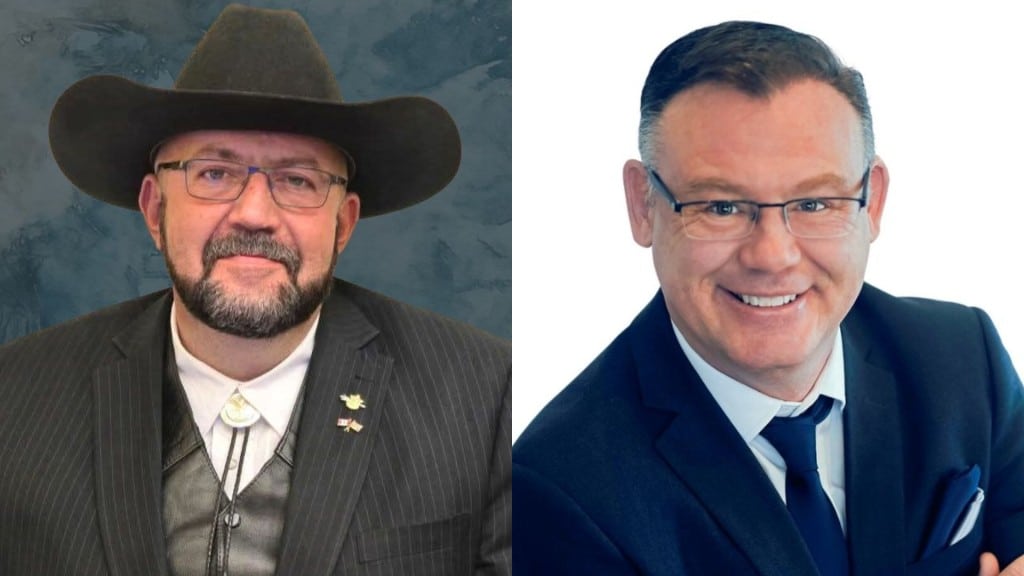
VICTORIA, B.C. — The Peace region’s MLAs have both said they voted for a bill to repeal the Human Rights Code to give the legislature the chance to debate it.
On February 26th, MLA for Kelowna-Lake Country-Coldstream Tara Armstrong tabled the Human Rights Code Repeal Act at the Legislative Assembly of British Columbia.
It was defeated at the first reading, with 37 MLAs voting for the bill and 50 against it. Peace River North MLA Jordan Kealy and Peace River South MLA Larry Neufeld both voted to progress it.
According to the act, the Human Rights Code is a law designed to prevent discrimination, promote a climate of understanding and mutual respect, eliminate patterns of inequality and foster a society where people have full and free participation in the economic, social, political and cultural life of British Columbia.
This comes after the British Columbia Human Rights Tribunal ordered Barry Neufeld, a former Chilliwack school trustee, to pay $750,000 to the local teachers’ association for his campaign against sexual orientation and gender identity (SOGI) resources in schools.
According to the Hansard record of the legislative assembly, Armstrong said she was introducing this bill to “end the assault on freedom of speech by our Human Rights Tribunal.”
She said: “Last week, they fined Barry Neufeld three quarters of a million dollars for refusing to believe that a man could become a woman, for his own personal opinions.”
Latest Stories
She claimed the bill is the “only solution” to the “assault on the rights and freedom of speech of Canadians.”
“This bill will protect ordinary people with common beliefs from politically motivated financial attacks,” she said. “It will abolish the Human Rights Tribunal, a kangaroo court, and repeal the Human Rights Code that the left is using to punish and profit from anyone who doesn’t adopt their views.”
Kealy told Energeticcity.ca that he votes yes at the first reading for every bill that is proposed.
He said: “The only way that you can actually see the bill for the second reading is if it’s voted through on first reading.
“So whether you agree with the sentence of how it’s brought through in first reading, you don’t actually get the bill until second reading, so you can’t actually debate the merits of it, good or bad, until second reading.”
He said that during the second reading of the bill, “you can see the bill and make an educated decision on what is in the bill, and then you make a vote based on the facts of what’s in the bill going forward.”
Kealy said there have been multiple occasions where a bill has been voted down on first reading.
“Essentially that by doing that, you’re shutting down democracy…whether you like the topic or not, when it’s brought forward in first reading, the house is meant to be able to debate and that debate doesn’t happen until second reading.”
This comes after Kealy’s bill to cancel B.C.’s Declaration on the Right of Indigenous Peoples Act (DRIPA) was voted down after its first reading on November 19th.
In a written statement to Energeticcity.ca, Neufeld agreed, saying he believes ideas should be debated openly in the legislature as that’s what the democratic process is for.
“My vote at first reading on MLA Tara Armstrong’s bill was not a vote on the substance or intent of the legislation,” he said. “Our caucus, including myself, supports human rights.
“First reading simply allows a bill to be introduced so MLAs can review it and have a proper debate in the legislature.”
He added: “The real discussion happens at second reading, where members can put their views and concerns on the public record.”
Stay connected with local news
Make us your
home page
Authors

Related Articles

Fort St. John artist’s new single cracks top 50 Canada country radio chart
Fort St. John musician Kyle McKearney has found success with his recent single Rearview, which has made its way onto the top 50 charts for Canadian country radio.
Early learning program to restart in Tumbler Ridge
Tumbler Ridge’s StrongStart program will reopen on March 30th at a temporary space in Tumbler Ridge Place.
Victim of Charlie Lake ‘altercation’ identified by RCMP amid homicide investigation
The person who died on March 13th after an “altercation” at the Charlie Lake boat ramp has been named as Gurkirat Manocha.