
Five takeaways on Alberta-Ottawa pipeline memorandum of understanding
Prime Minister Mark Carney and Alberta Premier Danielle Smith signed a memorandum of understanding on a pipeline to B.C.’s coast – here are five takeaways from the deal.
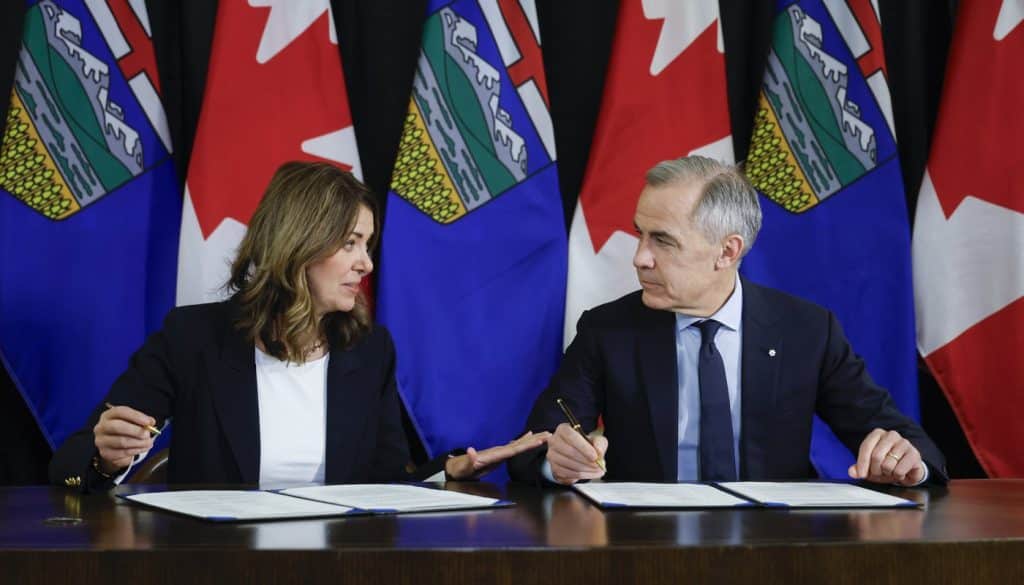
CALGARY, ALTA — Prime Minister Mark Carney and Alberta Premier Danielle Smith signed a memorandum of understanding to grow Alberta’s oil exports while also committing to making it a world leader in green energy technology.
Here are five takeaways from the memorandum of understanding:
Big-ticket infrastructure: Both sides agree to work on approving a bitumen pipeline of one million barrels or more per day from Alberta to Asian markets via a port on the B.C. coast. The line has to be privately financed and Indigenous co-owned. If the line gets approval, Ottawa is to adjust existing tanker ban rules on B.C.’s coast to allow for exports to Asia from a deepwater port.
—
Carbon capture quid pro quo: Alongside the pipeline, both governments will work with the oil giants comprising the Pathways Alliance to create the world’s largest carbon capture utilization and storage project. The pipeline proposal and the carbon storage project are joined at the hip — one does not proceed without the other.
—
Power play: The two sides will work to build out transmission lines from Alberta to B.C. and Saskatchewan to help move low-carbon power across the west as part of a strategy to get to a net-zero electricity grid by 2050. Alberta and Ottawa are to work to develop a nuclear generation plan with a goal of nuclear plants operational by 2050 to serve AI data centres and decarbonize the grid.
—
Green dealing: Ottawa says it will not implement the looming oil and gas emissions cap and would suspend Clean Energy Regulations limiting emissions from power plants that burn fossil fuels. It is to keep those regulations on hold if it can reach a deal with Alberta on carbon pricing. Alberta is to negotiate an industrial carbon pricing deal ramping up to at least $130 a tonne by April 1st. By that time, the two sides must also agree on methane reductions equal to 75 per cent from 2014 levels by 2035.
—
Indigenous partnership: There has to be joint ownership and shared benefits with Indigenous peoples on the pipeline and potentially on the carbon storage project. Both Ottawa and Alberta will use various incentives to backstop Indigenous investments.
—
This report by The Canadian Press was first published on November 27th, 2025.
The Canadian Press
Stay connected with local news
Make us your
home page
Authors

Related Articles
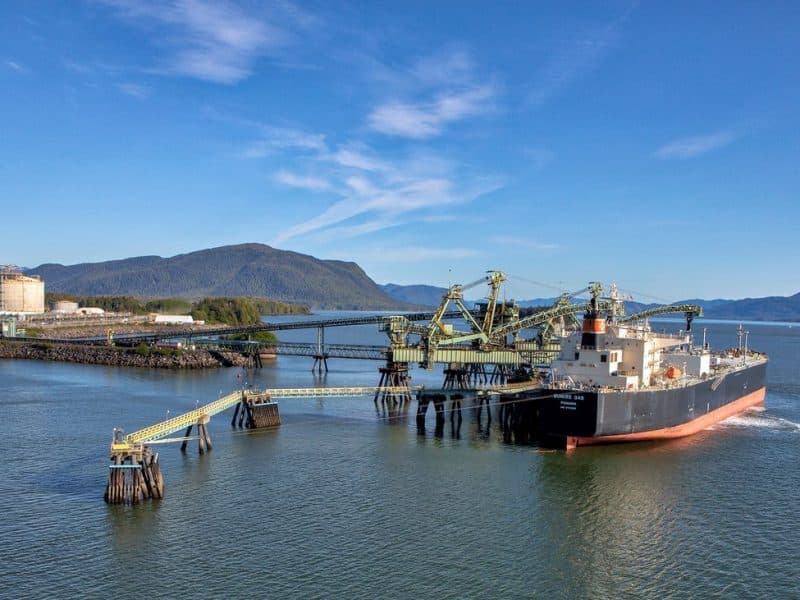
AltaGas hopes to grow propane foothold in Chinese market
AltaGas says it’s been able to seize a meaningful foothold in the Chinese propane market and it sees more opportunity ahead.
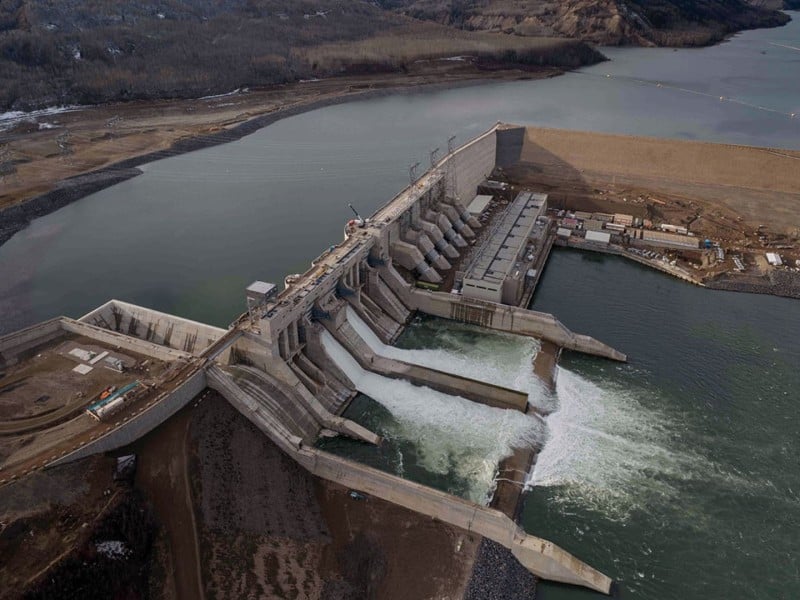
Site C employment continues gradual decline in November
The number of workers employed on the Site C hydroelectric dam project saw an overall decline from October to November 2025.
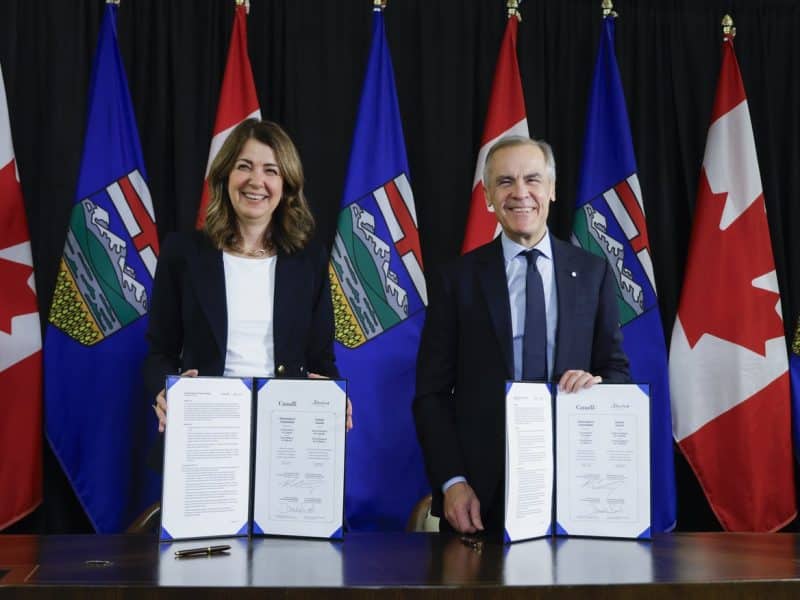
Alberta launches website for potential new West Coast oil pipeline
The Alberta government has launched a website for the pipeline it wants to see built through B.C. to the coast.