
New legal challenge issued over PRGT ‘substantially started’ decision
Ecojustice lawyer Matt Hulse said the point of the challenge to the Prince Rupert Gas Transmission (PRGT) pipeline ‘substantial start’ ruling is to ensure the province applies its environmental laws in a way that protects communities and ecosystems.
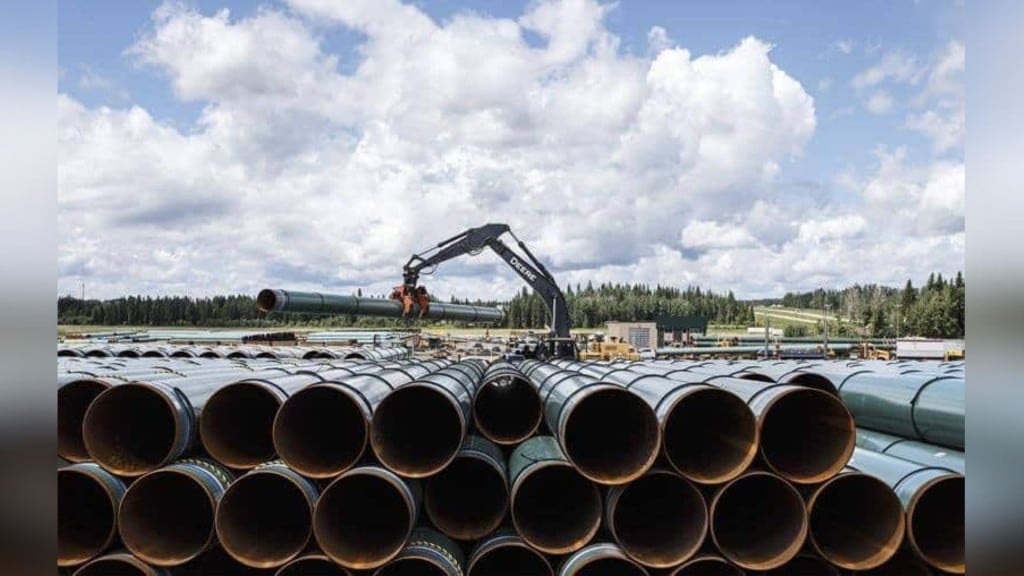
FORT ST. JOHN, B.C. — A team of community groups and a B.C. resident have partnered with a Canadian legal charity to challenge the provincial government’s decision to allow the Prince Rupert Gas Transmission (PRGT) pipeline project to proceed.
The pipeline — which hasn’t been without controversy, drawing criticism from various Indigenous groups and the Environmental Assessment Office (EAO) — was deemed ‘substantially started’ in June 2025.
That means the environmental assessment certificate issued by the EAO for the project in 2014 will remain in effect for the entirety of its construction.
Local News You Can Trust
Label us as a Preferred Source to see our stories more often
However, a group of lawyers from environmental law charity Ecojustice filed a judicial review application on September 24th, 2025, urging the government to “find that the head of the EAO was unreasonable in determining that construction on the PRGT project was substantially started” in time for the November 25th, 2024 deadline.
Ecojustice reportedly filed the motion on behalf of a coalition that includes Kispiox Valley Community Centre Association, Skeena Watershed Conservation Coalition and Kispiox Valley landowner and resident Kathy Larson.
“The coalition argues the limited construction that occurred only three months before the deadline is not a substantial start of this massive pipeline project,” Ecojustice’s press release argues.
“After nearly 10 years of inactivity, the pipeline company only partially cleared trees from about five per cent of the pipeline route and built some limited supporting infrastructure.”
Latest Stories
There’s no set standard for when a project is ‘substantially started,’ according to the provincial government’s official policy. Instead, projects are assessed on a case-by-case basis.
At the time, after a months-long assessment process, the EAO reportedly found the construction at the facility thus far was “consistent with standard pipeline development.”
That, combined with other non-construction actions that had been taken, demonstrated the Nisga’a Nation and Western LNG — which co-own the project — “had a strong intention to advance the project in the near term,” according to the EAO.
Ecojustice and its coalition argue having “such a low threshold” for what constitutes a substantial start for projects like this undermines the reason for establishing deadlines for environmental assessment certificates.
“The substantial start decision means that the PRGT project could proceed without taking into account the many changes to the project and the region that have occurred since the project was assessed over 10 years ago,” the press release reads.
Ecojustice lawyer Matt Hulse said the point of the challenge is to ensure the province applies its environmental laws in a way that protects communities and ecosystems dependent on them.
“We expect B.C. to follow its own rules,” Hulse said, “and we’re asking the courts to uphold a simple principle: if construction on a project has not been significantly started by the deadline set by the government, it needs a new environmental assessment in order to proceed.”
Another petition challenging the project was dismissed in court in August. In September, the EAO approved an amendment to shorten the pipeline’s route. It will now start 37 kilometres west of Chetwynd and run for 839 kilometres, to either Lelu Island or the proposed Ksi Lisims LNG facility near Prince Rupert.
Stay connected with local news
Make us your
home page
Authors

Related Articles

Registration for smart thermostats begins in a government effort to lower energy costs
Registration for BC Hydro’s Power Smart 2.0 program is available on the company’s website.
Saulteau First Nations finalizes EPA agreement for Taylor South Wind Project
The 30-year electricity purchase agreement was signed by Saulteau First Nations and B.C. Hydro