
‘We’re resilient’: Guests, dignitaries and residents reflect on the importance of the National Day for Truth and Reconciliation
First Nations communities and groups across the Peace River region held several celebrations marking the day for Truth and Reconciliation.
FORT ST. JOHN, B.C. — As September drew to a close, Indigenous groups across the Peace region came together for what is one of the most important events on the community’s calendar.
The National Day for Truth and Reconciliation was only recognized by the Canadian government in 2021, but its importance goes further than that.
Also known as Orange Shirt Day, the day commemorates the atrocities experienced by Indigenous peoples within Canada’s residential school system and was first recognized in 2013.
For some survivors, the trauma experienced by relatives has had a ripple effect lasting generations.
On Saturday, September 27th, local Indigenous groups organized a round dance and tea dance for both the public and the First Nations community at the Taylor Community Hall.
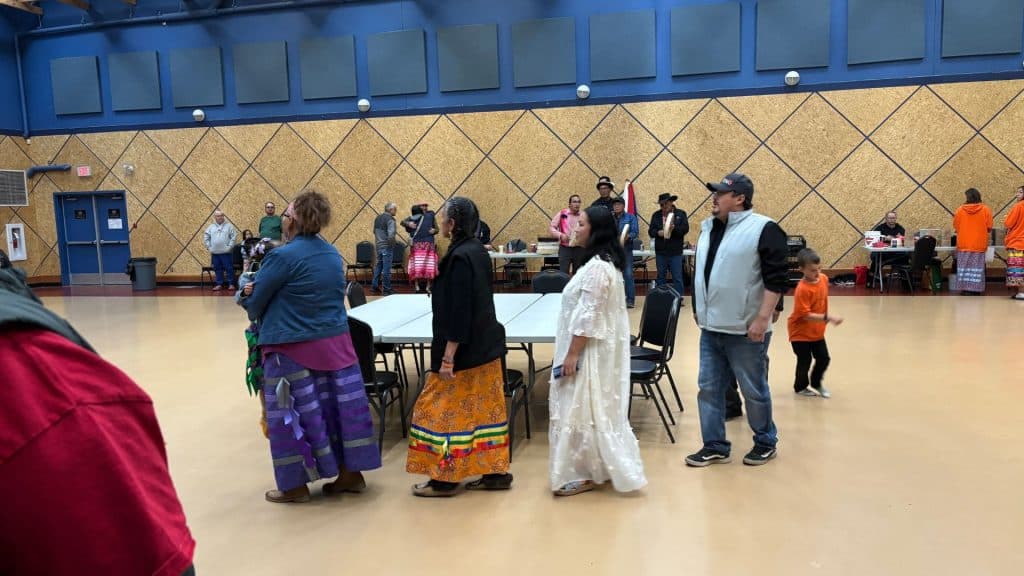
It was organized by the Treaty 8 Tribal Association (T8TA), the Indian Residential School Survivors’ Society (IRSSS), the Fort St. John Friendship Society (FSJFS) and the District of Taylor.
Latest Stories
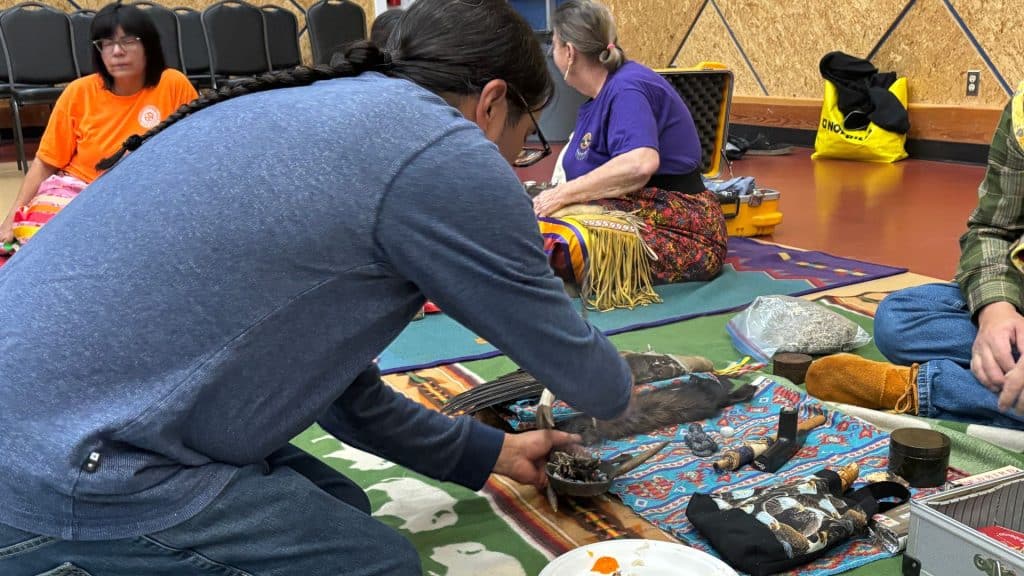
A smudging and pipe ceremony was held beforehand, accompanied by dinner and a drumming performance from drummers from Doig River First Nation (DRFN) and Duncan’s First Nation of Alberta.
The event was emceed by Donald MacDonald, known as Donnie Mac.
“People are coming together,” said MacDonald, who hails from the Onion Lake Cree Nation, which straddles the Alberta-Saskatchewan border. “Reconciliation is making things right again.
“With residential schools, we lost the language, we lost the culture. We lost a lot of different things. Unfortunately, a lot of the kids never came home. It was pretty tough on the parents back then. I can only imagine someone coming to take my kids, not knowing how they are doing or where they are.”
MacDonald added First Nations people “are resilient” and that he sees “a change [with culture] coming back.”
“The seventh generation has come back and we’re seeing that change today,” said MacDonald.
Debra Grant, who was part of the pipe-smoking ceremony, told Energeticcity.ca she has seen both worlds.
Now 70 years old, Grant lives in Hudson’s Hope. She grew up in Idaho, United States on the Lapwai reserve, with ancestry including parts European, Lapwai, Navajo and Sioux.
She told attendees she was just eight years old when the residential school on the reserve closed, and said coming to these events “is part of healing.”
“When colonization came, they had certain ways of doing things that didn’t meet with our ways,” said Grant. “They didn’t understand how powerful our ways were.
“Residential schools brought a lot of pain and disease to our people. A lot of alcohol and drugs. When I got sober, the ceremony was where I came. That’s where the healing is.
“Not only does it heal us, it heals generations back. It’s really powerful.”
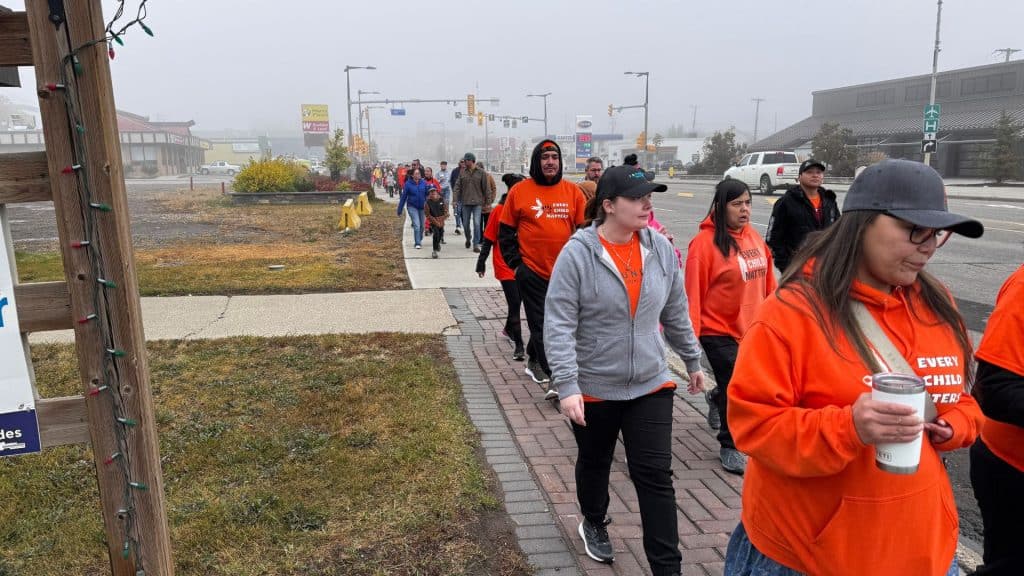
On Tuesday, September 30th, T8TA, the IRSSS and FSJFS hosted a walk and barbecue that featured a workshop for the public to design orange shirts.
After opening remarks by executive directors Todd Morrow of FSJFS and Marlene Roy of T8TA, a large crowd assembled – dressed mostly in orange shirts – despite a very cloudy early morning.
They then headed south on 100th Avenue, heading west on 100th Street and down to FSJFS offices on 95th Avenue, where attendees were given the opportunity to put together their own slogans.
Joe Pruden, a member of Bigstone Cree Nation in Alberta and a lifelong resident of Fort St. John, said the trauma experienced by his grandparents at residential schools was passed down generations.
He said the intergenerational trauma didn’t show him “how to properly express emotions,” and led to the lack of a family bond.
“I wasn’t taught how to deal with specific things in my life,” said Pruden. “I have a family. I realize I could be giving more of my time and sharing my own experiences. I am creating an avenue for my family.
“My children live in this world where we’re just starting to be proud of giving a chance now, being able to share our stories and culture. It’s important to help push the energy forward for the generations coming after us.”
He said his grandparents “would be proud” looking down on the support on Tuesday.
Stay connected with local news
Make us your
home page
Authors
Related Articles
Funding for Dawson Creek medical accommodation set to be discontinued
Bultery’s House in Dawson Creek is set to have its funding discontinued in December 2026.

B.C. Conservatives call for update on Northern B.C. involuntary care facility
The Conservative Party of British Columbia is calling on the provincial government to provide an update on a proposed Prince George involuntary care facility.
“It helps build community:” Robert Ogilvie Elementary School principal reflects on Art Show
The Art Show at the Robert Ogilvie Elementary School had more than 200 students showcasing their artwork on May 4th.