
Air quality statement lifted, local smoke remains in forecast
Environment Canada’s special air quality statement for the Peace region ended on September 9th, but residents are being told to continue to expect smoky skies.
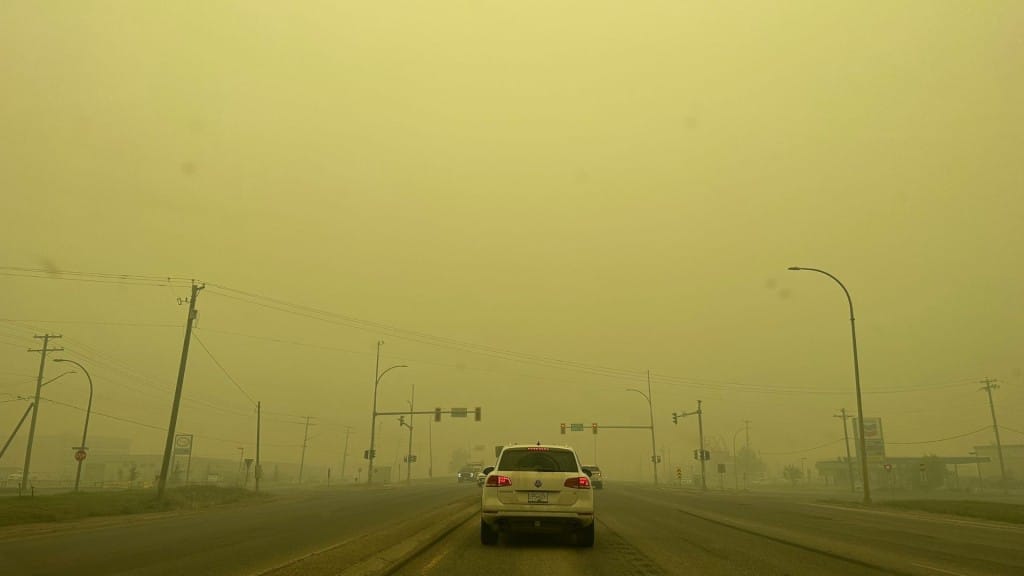
FORT ST. JOHN, B.C. — Environment Canada’s special air quality statement for the Peace region has ended, but residents are being told to continue to expect smoky skies.
The agency lifted its special air quality statement for the region, as well as for the Fort Nelson area, at 11:46 a.m. on Tuesday, September 9th.
It first began to raise alarm bells about air quality in the northeast on September 3rd, when it issued a warning for the region about wildfire smoke affecting the area.
The air quality statement had remained in effect following that day until it ended on the 9th. While the statement was in effect, residents were urged to limit their time outdoors and to reschedule outdoor sporting events and activities.
Despite the statement now having ended, Environment Canada’s forecasts for the Fort St. John area include local smoke for the rest of the day on September 9th, with no mention of the expected air quality on Wednesday, September 10th.
Similar mentions of local smoke are also included in the September 9th forecast for the Fort Nelson area.
According to the federal government’s website, wildfire smoke is a mixture of gases, including ozone, methane, sulphur dioxide, nitrogen dioxide, carbon monoxide, volatile organic compounds, fine particulate matter (PM2.5) and polycyclic aromatic hydrocarbons (PAHs).
Latest Stories
Symptoms of inhaling these air pollutants can include headaches, a mild cough, increased production of mucus and irritation of the eyes, nose sinuses and throat, as well as dizziness, wheezing, chest pains, asthma attacks, shortness of breath and an irregular heartbeat.
The smoke in the area comes from wildfires, many of which continue to burn across northeast B.C., including one that recently ignited in the South Peace near Chetwynd.
The overwhelming majority of fires in the northeast are considered ‘under control’ or ‘being held’ by the BC Wildfire Service, meaning they are not expected to expand beyond their current boundaries.
Environment Canada’s website has the most up-to-date information regarding local weather in regions all over the country.
Stay connected with local news
Make us your
home page
Authors

Related Articles
Peace River region maintained ‘adequate’ moisture levels, according to April’s report
Agriculture and Agri-Food Canada’s agroclimate specialist said there is no significant drought in the Peace River region.
One-hectare wildfire reported north of Fort St. John
The one-hectare wildfire was reported during the afternoon of Wednesday, May 13th.