
Strike looms for hundreds of Peace region workers as BCGEU issues 72-hour notice
BC General Employees’ Union (BCGEU) held strike votes throughout August, with 92.7 per cent favouring industrial action.
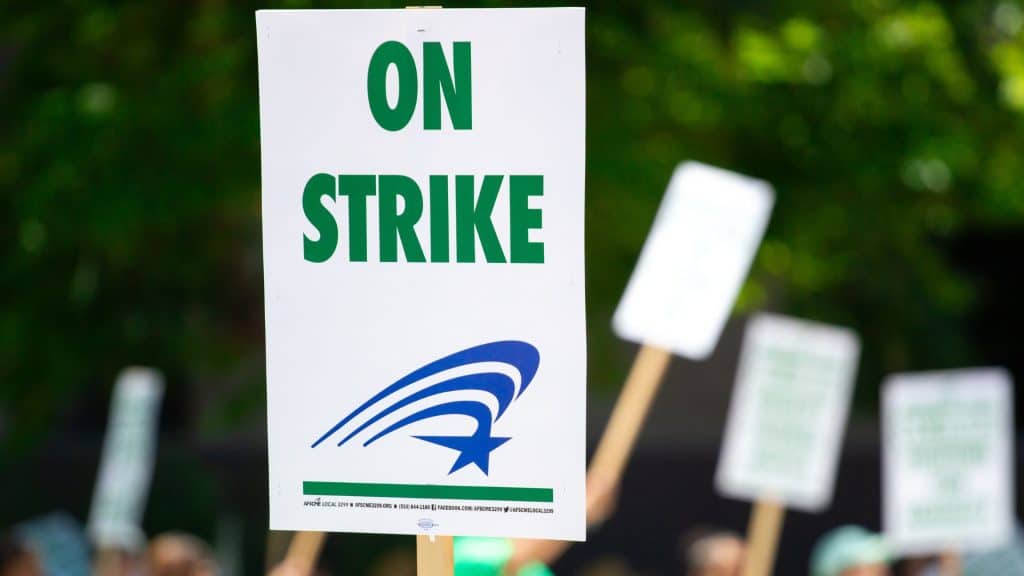
FORT ST. JOHN, B.C. — Hundreds of Peace region public service workers could walk out next week after a union voted overwhelmingly to strike and issued a 72-hour notice.
The British Columbia General Employees’ Union (BCGEU) has held strike votes throughout the month, with 92.7 per cent of votes favouring industrial action.
The union represents 486 Public Service Agency workers in the Peace region and 191 specifically within Fort St. John.
Thirty-four thousand BCGEU members affected by labour negotiations voted in favour of a strike which would start immediately after the Labour Day weekend, according to the BCGEU’s president Paul Finch.
Finch told Energeticcity.ca the voter turnout was about 86 per cent.
“We were in bargaining from January,” said Finch. “We reached an impasse in July. The sides were too far apart.
“We took some time to educate our members on what was on the table. Because it’s summer, we gave our members three weeks to vote, and today the polls closed at noon and you saw the results.”
Latest Stories
The biggest point of contention is affordability, as the BCGEU alleges the provincial government’s Public Service Agency’s wages has not kept up with the costs of living, according to a statement on the union’s website.
It alleges 70 per cent report spending more than 30 per cent of their pre-tax income on housing costs, with approximately half living paycheque to paycheque, according to a spring survey conducted by the BCGEU.
“The government brought forward a monetary offer that was too low,” said Finch. “[It] doesn’t reflect the cost of living in B.C., doesn’t reflect the affordability crisis we’re in and the needs of our membership.
“The core issue here is compensation and ensuring that our members, who keep British Columbians safe, who generate the economic engine of the province, have enough money to get by.”
Energeticcity.ca reached out to the provincial government’s Public Service Agency for further comment, but did not receive an immediate response.
Stay connected with local news
Make us your
home page
Authors

Related Articles

WMFN Chief named keynote speaker at Indigenous Resources Opportunities Conference
Roland Willson will be part of a panel discussing the Hope Truck Initiative, which had its first edition in 2025

Funding for Dawson Creek medical accommodation set to be discontinued
Bultery’s House in Dawson Creek is set to have its funding discontinued in December 2026.
B.C. Conservatives call for update on Northern B.C. involuntary care facility
The Conservative Party of British Columbia is calling on the provincial government to provide an update on a proposed Prince George involuntary care facility.