
‘Big, bold vision’: Society seeks support for Site C camp conversion
The North Wind Wellness Centre society is seeking support from all levels of government to convert the Site C workers camp into a treatment facility.
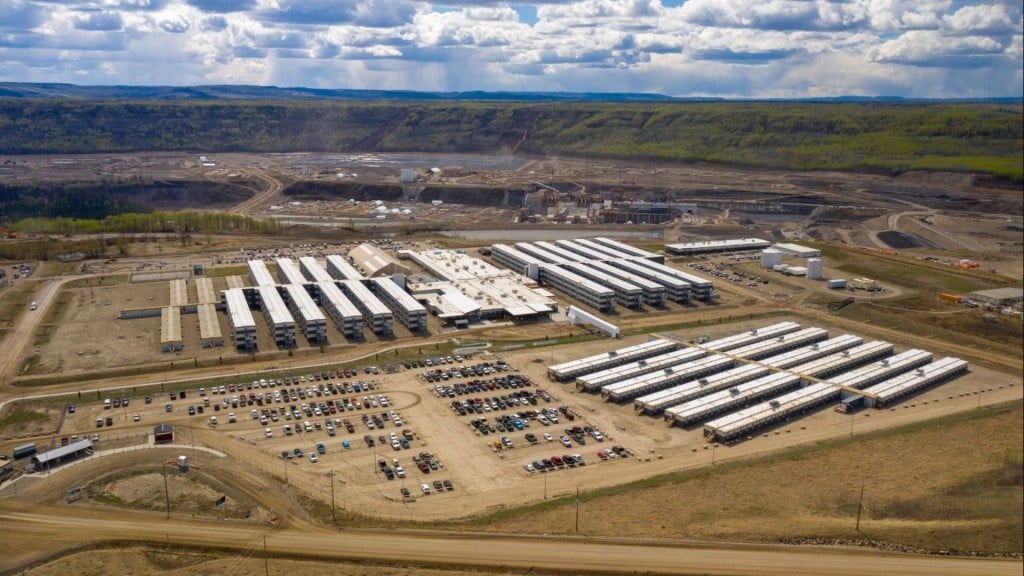
FORT ST. JOHN, B.C. — A northeastern wellness society is looking to multiple levels of government for support in repurposing a nearly 2,000-bed workers camp into an 800-bed mental health and addiction treatment facility.
During the July 14th meeting of the Peace River Regional District (PRRD) board of directors, a delegation from the North Wind Wellness Centre society laid out its plans and proposals to turn the 1,700-person BC Hydro Site C workers camp near Fort St. John into a treatment centre for mental health and addiction.
The regional district was first notified BC Hydro intended to have the camp repurposed when it received an inquiry about the possibility of debris from the demolition of the camp being deposited in PRRD-operated landfills in March.
In May, the utility told the PRRD it had received a “high level of interest” from third parties regarding the camp and it was working to repurpose rather than demolish.
In June, the society sent a letter seeking the district’s support for the project, which resulted in an invitation to present before the board of directors.
Mukhtar Latif, a strategic development consultant with Pomegranate Housing Consultancy, and Isaac Hernandez, the executive director of the North Wind Wellness Centre society, attended the meeting to explain the “potentially viable” and “sustainable” concept for the future of the workers camp.
Latif explained the society intends to allocate 1,000 of the beds in the camp to housing for the centre’s workforce, and leave the remaining beds for the various treatment programs which are planned to operate out of the facility.
Latest Stories
“We know there is a critical need for housing in the community…and it generates revenue to support the operating costs of the rest of the facility,” Latif said.
“We’re looking to carve up different parts of the building to provide different services as we move forward, and there will be a transition into those programs over time, because we understand that it will take time to negotiate with government to get the funding and the programs in place, but we want to be able to sustain the ongoing operations and keep that facility there on site.”
Latif explained the society hopes to keep the facility where it currently is, which would require approval from the provincial government, due to several parts of the camp being built with fixed components that would need to be scrapped if the camp was moved.
“It’s a big, bold vision, but we are [at a place] in the province where there is no long-term strategy on how we deal with mental health and addiction, and this will be a flagship development that does need other parties to come to the table to work together with us,” Latif said.
The directors encouraged the society to keep gathering information and detailing a plan for the camp, with Travous Quibell, director and mayor of Hudson’s Hope, encouraging the society to continue its efforts.
“I’m sure [BC Hydro] have a desire not to see a $500 million facility squandered, and between the province of British Columbia, there’s an opportunity to make a splash here, a big one,” Quibell said.
Construction on the Site C workers camp began in 2015 and was finalized in 2017 by ATCO Two Rivers Lodging Group, with a value of approximately $470 million.
The facility has been in operation since then and supports the construction of the Site C hydroelectric dam, and can support between 1,600 and 2,200 workers.
The camp consists of 21 three-story dorm units, 39 three-story corridors, 131 kitchen, dining and recreation units, 24 modular offices, a fitness building, a gymnasium and a theatre.
Stay connected with local news
Make us your
home page
Authors

Related Articles

(Opinion) Bear Flat Dispatch: Canada geese on ice
Regular contributor Ken Boon writes on the new Site C dam and how it has impacted the gaggle of geese who move onto his property each year.
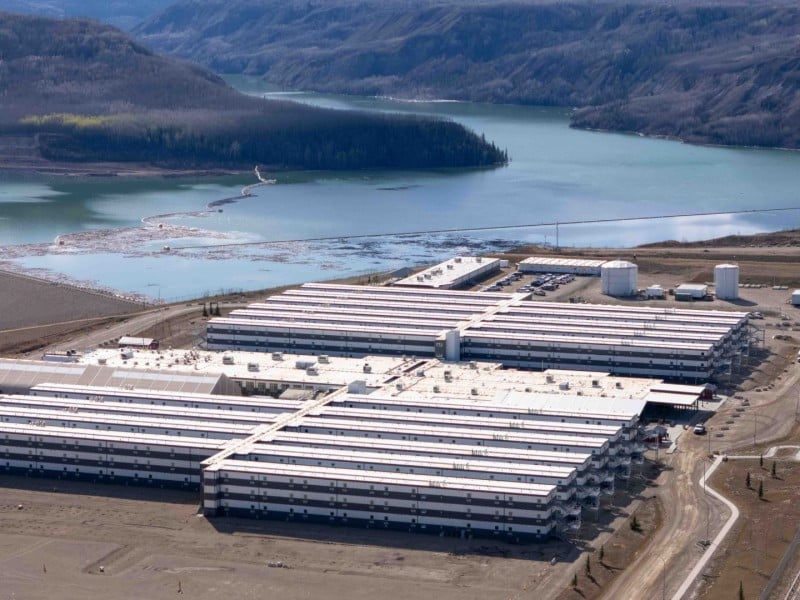
Site C workers’ camp to be repurposed for North Coast Transmission Line
BC Hydro is repurposing its Site C hydroelectric dam workers’ camp for the North Coast Transmission Line (NCTL) project, set to run from Prince George to Terrace.
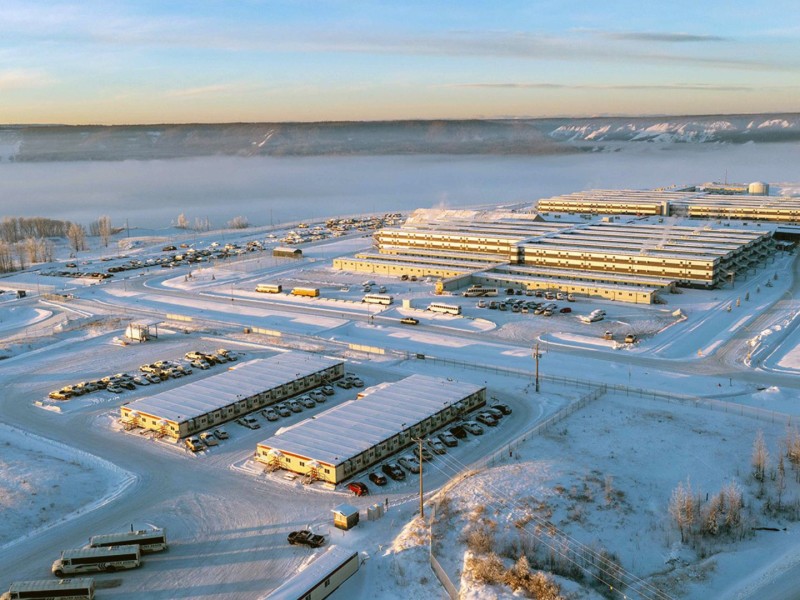
Society reimagines Site C camp conversion after initial idea deemed ‘too complex and costly’
The North Wind Wellness Centre society is looking for support from the Peace River Regional District for its new proposal for converting the BC Hydro Site C workers’ camp.