
‘It takes a village’: National Indigenous Peoples Day festivities at Tse’k’wa span generations
National Indigenous Peoples Day 2025 was celebrated at the Tse’k’wa heritage site in Charlie Lake.
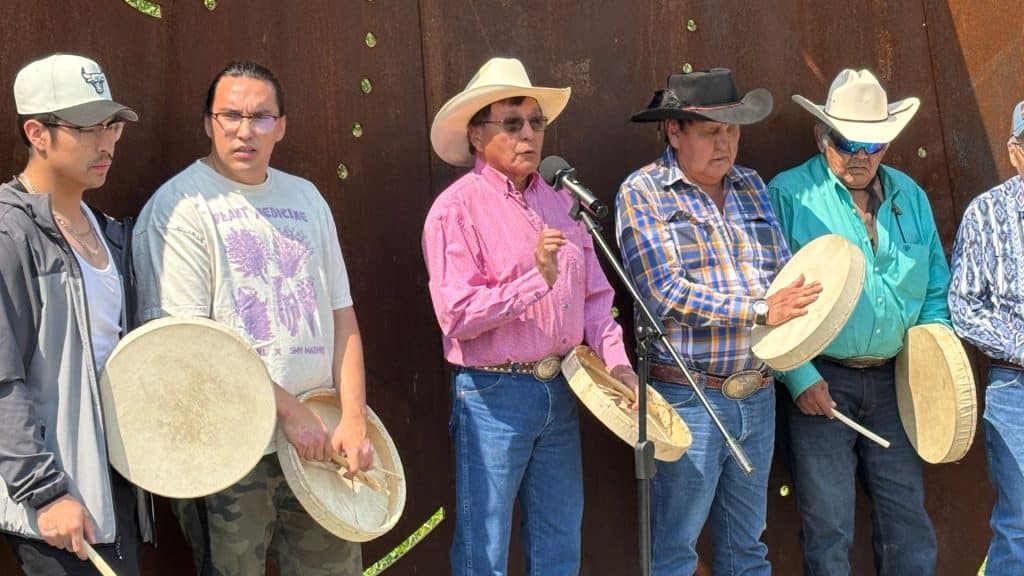
CHARLIE LAKE, B.C. — Although the crowd was small, the gathering to celebrate National Indigenous Peoples Day at Tse’k’wa heritage site at Charlie Lake was nonetheless festive in nature.
The event on June 21st was hosted by the Tse’k’wa Heritage Society, a group of three First Nations consisting of Doig River First Nation (DRFN), Prophet River First Nation (PRFN) and West Moberly First Nations (WMFN) who bought the site in 2012.
Gathered around the amphitheatre at the heritage site were around two dozen friends and family – both Indigenous and non-Indigenous – with activities ranging from a native plant hunt to self-guided tours of the cave, known as the ‘Rock House’ in the Beaver language.
Although board members Laura Webb and Garry Oker were unable to attend due to prior engagements, executive director Alyssa Currie led the festivities, with the day beginning with a performance by the DRFN drummers.
Currie told the crowd who attended “it took a village” to put the event on, with School District 60 volunteering a school bus to shuttle visitors and volunteers who set up tables to get the event together.
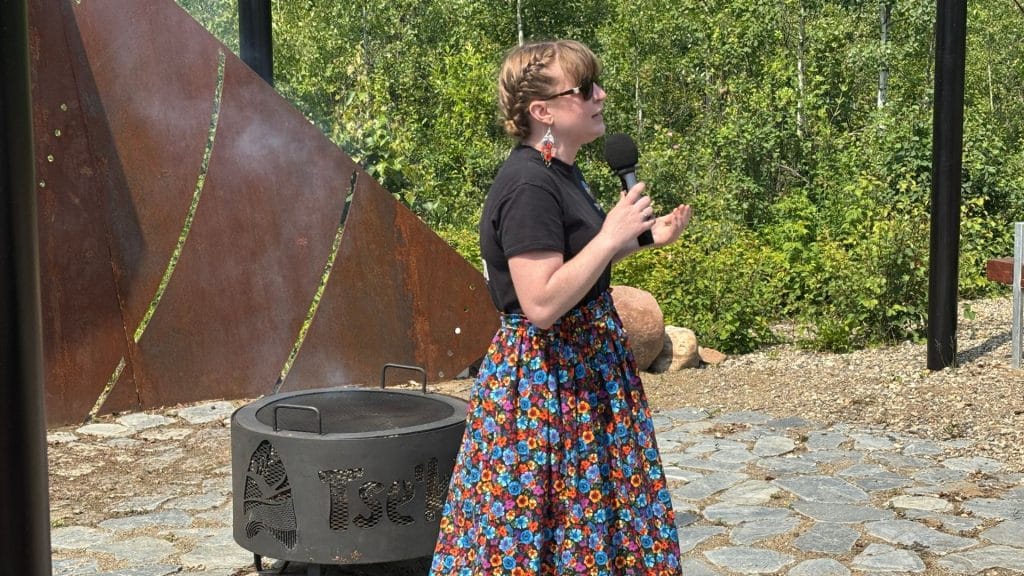
She acknowledged the event featured multiple generations of families who took part in embracing and celebrating First Nations culture.
Latest Stories
“There’s a lot of things that happen behind the scenes to make an event like this,” said Currie. “What we have found for this event and so many others, is that our community shows up for us in amazing ways.
“I live and work and play on treaty land here in Treaty 8. It’s great to see so many different ages and so many different cultural backgrounds come out to enjoy Tse’k’wa and connect with our community Elders and all of the people that are here.”
The event featured self-guided tours of the cave as well as archaeological artefacts dug up during excavations of the Charlie Lake site by Simon Fraser University from the 1970s to the 1990s.
The school repatriated the fossils in 2024. Also on hand was the Fort St. John Public Library, which showcased the Indigenous-centric works found within its walls located in the North Peace Cultural Centre.
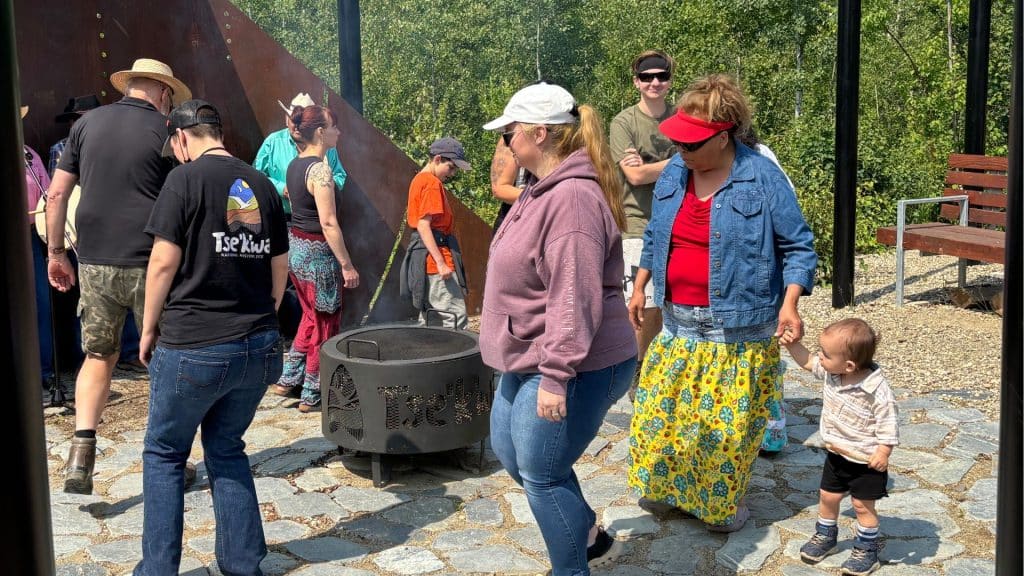
A plant-themed bingo, where attendees could search for the plants native to the soil of the area, and a raffle were also held.
Trail Acko, a member of DRFN who played with the drummers, summed up the day’s celebrations as one of continued importance.
“That’s everything,” said Acko. “I’m part of the DRFN drummers. All the songs we sing, they’re all generational songs. The newest song was maybe from the 60s or 70s. Other songs that we sing just go further back, like hundreds of years.
“Everything’s generational. I’m learning to drum the songs my grandpa sang. I never got to meet him, because he passed away in 1977, but there are recordings of him singing the same songs we sang earlier. It brings me closer to him, and the heritage and what it means to be a Dane-zaa person.”
PRFN Chief Valerie Askoty, who also attended, said events such as National Indigenous Peoples Day are occasions to show Indigenous people’s “resiliency.”
“Years ago, even I was oppressed. I wasn’t allowed to learn my language,” said Askoty. “I used to be ashamed of being [part of] a First Nation, because that’s the way we were made to feel.
“Now, [we have] our own day where we can celebrate who we are and be proud. Since becoming a leader, it’s really helped me showcase what we have. We’re resilient people, and we’ve come a long way. I’m proud to be here to see what we do for our day, it’s been a long time coming.”
National Indigenous Peoples Day was first commemorated in the 1990s. Other events around the Peace region on June 21st included a family gathering at Chetwynd’s Rotary Park and festivities at Fort Nelson First Nation.
Stay connected with local news
Make us your
home page
Authors
Related Articles
Fort St. John Métis Society to host conservation and outdoor education program
The Conservation and Outdoor Education program is a program offering ethical, safe hunting practices according to the BC Wildlife Federation.
FSJ Métis Society annual general meeting taking place this weekend
Constitution reworks and annual reports are on the agenda, says organization’s director.
(UPDATE)Disappearance of Fort Nelson woman featured on true crime podcast
It has been just under two years of the last time anyone saw Fort Nelson First Nation resident Karen Tessier, whose story is featured on the True North, True Crime podcast