
Industry-led Indigenous school attendance program celebrates quarter-century, looks for new partners
The Stay in School program, which encourages Indigenous students in Treaty 8 communities to attend school, is celebrating its 25-year milestone.
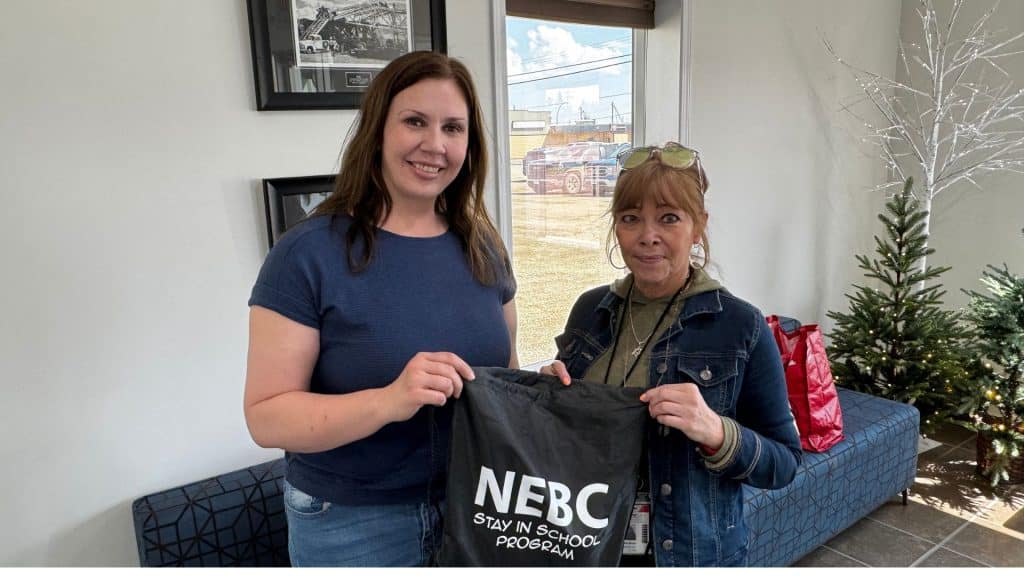
FORT ST. JOHN, B.C. — Industry leaders backing a program to assist more First Nations children in finishing school are celebrating a milestone as another year draws to a close.
The northeast B.C. Stay in School program (SIS) is celebrating 25 years helping First Nations children from all Treaty 8 communities finish their education from kindergarten through to grade 12.
If students enrolled at reserve schools attend at least 90 per cent of the school year, they can receive incentives and awards. Each student also receives a certificate at the year’s end.
Looking for something to do?
Check out our new Events Calendar!
Initially beginning with Burlington Resources (which became Poco Energy Solutions), the SIS program expanded to include other partners throughout its history, including Anadarko, Canadian Natural Resources Limited (CNRL), Petro-Canada ConocoPhillips and Talisman Energy.
With various mergers and acquisitions occurring within the oil and gas industry, the program has just two partners still spearheading the initiative: CNRL and ConocoPhillips, with representatives from both companies looking to see it grow further.
Marlene Waghelstein, stakeholder and Indigenous relations advisor for ConocoPhillips, describes the program as “part of” the company’s “spirit values.”
“It hits with our community investment. We work with these communities,” said Waghelstein. “Burlington Resources started this program, then Poco and ConocoPhillips merged with them. CNRL came into the picture and it’s been both companies from the beginning.
Latest Stories
“We’ve had this area of focus for where we work and operate for a long time.”
Jamie Bodnarchuk, a surface landman for Indigenous and stakeholder relations for CNRL, says participation in the program is just being a “good neighbour.”
“It’s really important to invest in the communities that you’re working in,” Bodnarchuk said. “It definitely hits [CRNL’s] core values as a company with our mission statement, supporting education, supporting youth and development.”
The industry representatives wrote in a press release that while the SIS program does not “directly address some of the systemic issues” related to a high school student dropping out, it welcomes proposals for community-level initiatives for various programs designed to address such issues, including head start, after school healthy snack, tutoring and youth programs to inspire educational goals.
“There are no milestones that need to be achieved. It’s simply motivating kids to stay in school and finish the school year,” said Bodnarchuk. “[Some of these kids] don’t have schools on their reserves. They have to travel quite a distance to get to school. So this is motivation.”
One of the schools participating in the program is the Chalo School at the Fort Nelson First Nation (FNFN).
The 120 students attending the school at all levels receive recognition several times throughout the year, says Jeanie Kenneway, a vice-principal at the school.
To qualify for the program, students must attend 90 per cent of classes throughout the school year. Kenneway says she works with struggling students on a plan to get them to achieve the necessary attendance.
“We do attendance awards monthly at our assemblies,” said Kenneway. “They could receive Tim Hortons gift cards. We celebrate by having pizza parties or taking them swimming, making it something that they’re working towards and [students] know the program is important.
“At our school, if you miss the bus, we will actually pick you up. Being at school is the first step in going forward and learning, [but] you have to be here to learn. If you’re not here, you’re missing concepts that are being taught. [Missing] 20 days of school in a year, that’s a month of school.
“We have had chronic students who don’t come and we just work on that and say, ‘let’s see if you can miss three days this month instead of seven’.”
More than 10,000 students have participated in the program since its inception, with 600 in the 2024-25 school year.
The program is open to all students within First Nations communities in Treaty 8. However, students who live off-reserve are ineligible to participate.
A celebratory barbecue commemorating the 25th year of SIS took place at West Moberly First Nations on June 19th, although each community may do a gathering for the students at different times of the school year.
Oil and gas companies interested in contributing to the northeast B.C. SIS program can email IR@crnl.com.
Stay connected with local news
Make us your
home page
Authors

Related Articles
Northern Health clocks in more than 100 hours of closures in March
Northern Health recorded more than 100 hours in closures of ERs and emergency services at health centres in northeastern B.C. in March 2026.

Pair arrested after alleged liquor store robbery in Fort St. John
The Fort St. John RCMP detachment arrested a pair of individuals earlier this week in connection with an alleged robbery of a liquor store.

More than 600 customers to be impacted by power outages in Dawson Creek, Taylor
BC Hydro has planned power outages in Dawson Creek and Taylor which will affect more than 600 customers on April 16th and 22nd.