
Fort St. John online learning school to support Indigenous students
School District 60’s May 5th meeting heard how the Key Learning Centre in Fort St. John offers “niche education programs” and is working to support Indigenous students.
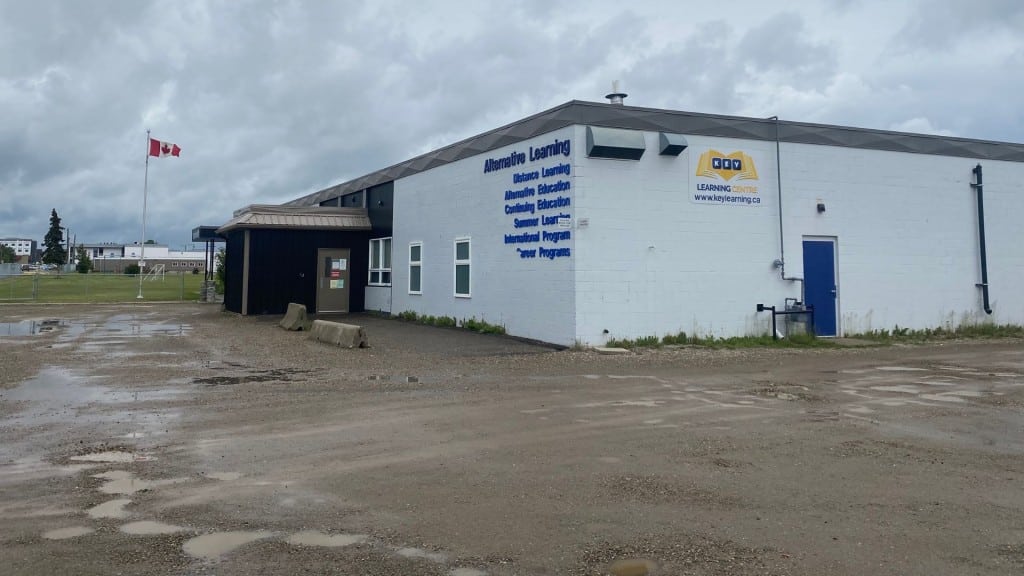
FORT ST. JOHN, B.C. — Online learning is providing alternative education opportunities in British Columbia while supporting Indigenous students.
That’s what School District 60’s (SD 60) May 5th meeting at the Key Learning Centre (KLC) in Fort St. John heard in a presentation by KLC principal Sean Thomas.
Thomas said during his presentation that online courses allow students to review pre-recorded lessons as needed, learn at an individual pace and reduce unwanted distractions.
Local News Straight
to Your Phone
Download our app today!
Available on Android and iOS devices
According to its website, KLC offers alternative education programs through online learning to around 5,000 students in British Columbia. These programs include online courses from Kindergarten to Grade 12 and adult courses.
Thomas said the school is undergoing an audit to better support Indigenous students.
SD 60 Superintendent Stephen Petrucci said the presentation showed how it supports students.
“It highlighted just the many different ways that the Key Learning Centre supports students who come from all kinds of different educational backgrounds and needs,” said Petrucci.
Latest Stories
KLC supports 242 Indigenous students, with 70 enrolled as their primary education source. A further 67 are cross-enrolled in SD 60 schools.
“We need to work very, very closely in a coordinated manner with Indigenous education to support our Indigenous students,” said Thomas.
Thomas said KLC will track course completion with Indigenous students and improve communication with families.
“As we gain traction with this, we will be able to provide that targeted tutorial support for the educational needs, as well as that cultural support to provide for the spiritual needs that these students have,” said Thomas.
KLC also conducted surveys to measure the satisfaction of the education it provides.
A parent survey said 50 per cent were ‘mostly satisfied,’ 37 per cent were ‘completely satisfied,’ 12 per cent were ‘somewhat satisfied’ and none said they were ‘not satisfied.’
Another survey showed 48 per cent of students ask for help ‘most’ or ‘all’ of the time. The survey also found 34 per cent of students ‘sometimes’ or ‘almost never’ ask for help.
Twenty-four per cent of students asked for help ‘most of the time’ when they didn’t understand something, while 16 per cent said they asked for help ‘all the time.’
Twenty-four per cent said they ‘sometimes’ ask for help, 10 per cent said they ‘almost never’ ask for help, and eight per cent said they ‘never’ ask for help.
Petrucci said although in-class learning is a preferred recommendation, online learning offers diverse options and can accommodate special circumstances for students needing a course not available at their district school.
“[Online courses] offer niche education programs for those diverse needs that exist out there,” said Petrucci.
More information on the Key Learning Centre can be found here.
Stay connected with local news
Make us your
home page
Authors

Related Articles
Snowfall warning issued for Highway 97 and Pine Pass
Environment Canada has issued a ‘yellow’ snowfall warning for Highway 97 and the Pine Pass, which might receive up to 15cm of snow overnight from March 26th to 27th.

Thieves target Fort St. John pizza restaurant for fourth time, leave with cash and vacuum
Thieves reportedly stole the cash register and a vacuum from Fort St. John’s Olio’s Pizzeria on Sunday, March 22nd, 2026.

SONS criticizes ‘devastating’ delays to Peace Villa expansion
Save Our Local Seniors (SONS) is speaking out alongside the City of Fort St. John about delays to the Peace Villa long-term care home expansion project by the B.C. provincial government.