
(Opinion) Evan Saugstad: We must support a vibrant forestry industry in B.C.
Regular contributor Evan Saugstad urges the people of B.C. to only support a government which values the province’s forestry and lumber industries.
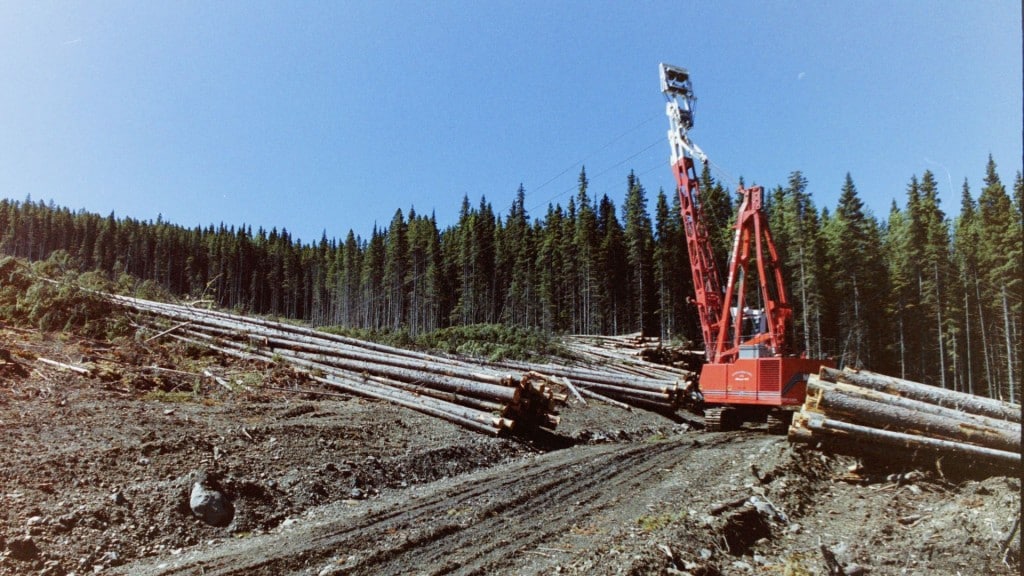
Anyone remember when B.C. lumber was not subject to U.S. tariffs?
What we now refer to as the Canada- U.S. Softwood Lumber Dispute began in 1981 when the U.S. lumber industry complained to its Department of Commerce that Canada was unfairly shipping and selling lumber in the U.S. The Department of Commerce found Canada’s lumber industry did not “hinder” the U.S. industry.
Although that decision was not appealed, additional and subsequent charges were levied by the U.S. producers, resulting in the softwood lumber war that continues today.
Since 1981, successive Republican- and Democratic-led governments have sided with the lumber industry and levied varying levels of tariffs against Canada. Canada has appealed each determination, with some being successful, while others not so much.
Canada and the U.S. have had agreements on what constitutes fair trade and peace has resulted, but the dispute is continued by further U.S. lumber industry challenges as agreements expired and/or were not renewed.
Today the Canadian and B.C. lumber industry pays tariffs on all lumber shipped to the U.S., with additional threats on the horizon.
As reported by CTV News, on April 4th the U.S. Department of Commerce “announced Friday that it planned to hike duties on Canadian softwood lumber from 14.4 per cent to 34.45 per cent…The U.S. imports roughly 30 per cent of the softwood lumber it uses, with more than 80 per cent of imports coming from Canada. British Columbia is Canada’s largest softwood lumber producer and exporter. According to the March National Association of Home Builders/Wells Fargo Housing Market Index, tariffs on lumber and other important homebuilding materials could raise the average cost of a home in the U.S. by US$9,200.”
Latest Stories
These new and punishing tariffs are scheduled to be implemented this fall, and should they accurately foretell our future, will result in significant curtailments and shutdowns in Canada’s already beleaguered forest industry.
But, and the big but is, these softwood tariffs are not all that ails the forest industry in B.C.
When Carney and the federal Liberal machine made their first stop in B.C. on April 7th on the campaign trail, the first thing they announced was, if re-elected, their commitment to protect “nature and biodiversity, including by creating at least 10 new national parks and marine conservation areas and 15 new urban parks.”
For that, Premier David Eby thanked him as this aligns with his NDP’s commitment to make 30 per cent of B.C. off limits to any industrial activities including logging, mining, fishing and more. When Eby asked Carney for a “Team Canada” approach for the softwood issues, similar to what Carney and Ontario Premier Doug Ford are pledging for Ontario’s auto industry, Carney nodded in agreement with some equally vague platitudes that he understands and if elected, may do something about it.
As an aside, rural Canada’s softwood tariffs are like the canola tariffs in the prairie provinces. These issues primarily affect Conservative-held ridings and therefore I do think are of much interest to Carney and his southern Ontario-based liberals to resolve as they remain focused on cars for their voters.
As northern B.C. sawmills have closed, one followed by another over the past few years, a common refrain has been in each company press release. Punishing tariffs, high log costs, lack of access to B.C.’s plentiful timber and uncertainty in permitting processes all contributing to what we see today.
Did you know that only one major sawmill remains operating in northeast B.C.; West Fraser in Chetwynd? There are two operating Oriented Standboard (OSB) plants, Fort St John and Dawson Creek.
So, what is next?
Is this the end of B.C.’s forest industry?
Is this the opening we need to dispense with the notion we need to begin turning B.C. into one big park for the world to enjoy?
I say, not so fast.
Although B.C. has lost many of our lumber manufacturing facilities, our main ingredients are still here – our forests, its trees and a workforce, which when combined, provides for some of the best quality forest products in the world.
Despite the economic hit our rural communities and residents have sustained with the loss of our forest industry, it is only a temporary setback, if we treat it as such, and do not let our governments succumb to the “end the forest industry” ideology that is so prevalent today.
U.S. tariffs will come and go, but lumber and other forest product demand won’t disappear as societal needs for quality forest products to sustain our lifestyles and economies will only increase.
Our forest and its trees are renewable and unfortunately, we must now wait for the world to once again turn to B.C. and our premium wood products. Substantially reduced harvesting levels means, as each year passes by, we have more and larger trees and more timber on the forest harvesting land base to once again be able to sustain our communities as it has in past decades.
But, as the forest industry has warned, B.C.’s continual reduction of our timber harvesting areas by turning them into parks, protected areas, old growth management areas, cultural areas, viewscapes, shelter belts and more means less available timber in our future. This, with an exceptionally poor record on managing wildfire, does put our future with a vibrant forest industry at risk, and much more so than any ideologue’s view of tariffs south of our border.
Sadly, that is what the U.S. forest industry would love to see – B.C. shuttering our forest industry.
Evan, and please don’t support any government, at any level that does not actively support a vibrant forest industry.
Stay connected with local news
Make us your
home page
Letters to the Editor
Letters to the Editor should be exclusive to Energeticcity.ca. Include your name, address and daytime phone number. Keep letters to 500 words or fewer. Letters may be edited for length and clarity. To submit a letter by e-mail to contact@energeticcity.ca.
Authors
Related Articles

(Opinion) Bear Flat Dispatch: Relieved to be in the hot seat
Regular contributor Ken Boon recounts an incidence in 2018 when he was pleased to be routed through the perfume and makeup section of Shoppers Drug Mart in Fort St. John.
(Opinion) Bear Flat Dispatch: Looking back to 2016 and the difference a decade makes
To celebrate the 2026 new year, regular contributor Ken Boon uses a column he wrote in 2016 to illustrate all the changes in the Peace River region over the last decade, such as the construction of the Site C dam.
(OPINION) Enserva CEO: So, you signed an MOU on energy – now what?
Gurpreet Lail, CEO of Enserva – the industry association for energy – writes on the recent memorandum of understanding signed between Ottawa and Alberta.