
Party Platforms: Federal parties talk Canadian economics
Canadian federal parties – NDP, Liberal, Green, Conservative and PPC – have shared their platforms on economics ahead of the election on April 28th.
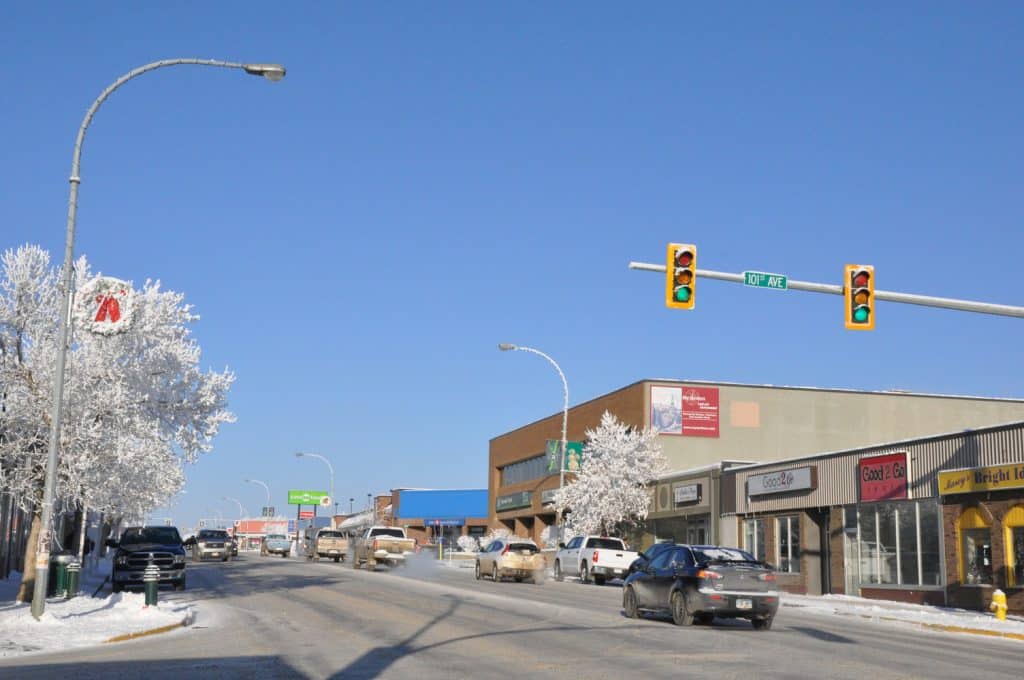
FORT ST. JOHN, B.C. — With the 2025 Canadian federal election less than four weeks away, political parties are releasing their political platforms.
These platforms cover topics such as housing, energy, healthcare, climate action and economics.
The deadline for candidate applications to Elections Canada passed on April 7th, and five candidates were confirmed and announced for the Prince George, Peace River and Northern Rockies riding: David Watson of the People’s Party of Canada; Mary Forbes of the Green Party of Canada; Cory Longley of the New Democratic Party; Peter Njenga of the Liberal Party and incumbent MP Bob Zimmer of the Conservative Party of Canada.
Ahead of the April 15th all-candidate forum in Fort St. John, Energeticcity.ca will be exploring the policies of each party running a candidate in the Prince George, Peace River and Northern Rockies riding.
Liberal Party of Canada
The Liberal Party’s economic plan includes tax cuts for the middle class and first-time home buyers and an expansion of dental coverage for Canadians between the ages of 18 and 64.
Announced on March 23rd, the party plans to eliminate the goods and services tax on all homes up to $1 million for first-time buyers, and on April 1st the party announced it wants to get the government “back in the business of building homes” by doubling the pace of home construction across the country.
Latest Stories
Conservative Party of Canada
The Conservative Party announced plans to cut income tax for Canadians by 15 per cent, as well as annual tax increases on alcohol, in an April 8th press release.
The party proposes a “Canada first reinvestment tax cut” to end the “tax penalty on reinvestment in Canadian business,” referring to this move as the party’s “rocket fuel” for the future of the economy.
The Conservative Party also spoke out against billionaires and corporations “dodging” paying taxes, promising to close offshore tax loopholes in a press release on April 8th.
Alongside this, the party plans to redirect resources from the Canada Revenue Agency (CRA) from audits on small businesses and charities to “offshore tax havens.”
The plan also includes creating a “name-and-shame” website to “expose” corporations found to be avoiding tax, as well as a program to give whistleblowers up to 20 per cent of recovered funds when exposing “illegal tax schemes.”
On April 10th, Conservative Party leader Pierre Poilievre announced the party’s “Canada first economic action plan,” which includes major industrial support for the energy sector, rapid approvals for resource projects, and “cutting red tape by 20 per cent.”
New Democratic Party (NDP)
In an April 4th press release, the NDP announced a plan to stop corporations using offshore havens to avoid taxes.
“Because when they don’t pay their fair share, everyday Canadians are left paying the price through cuts to healthcare and the public services families rely on,” the party stated.
The NDP states it will achieve this by ending tax agreements with known havens such as Bermuda, requiring corporations to “prove a genuine business reason” for offshore accounts and implementing public country-by-country financial reporting to prevent corporations from “hiding profits.”
The NDP also proposes launching a review of the tax code to “close loopholes that allow big corporations to avoid paying” taxes.
Green Party of Canada
The Green Party’s plans for Canada’s economic future involve a focus on “fair taxation” and “making our tax system work for everyone.”
“Our tax system isn’t fair; working families struggle to pay their bills, meanwhile, big corporations hide billions in profits,” the party said in its taxation plan.
The party believes “too much wealth in too few hands” threatens Canadian democracy and the economy, and promises to eliminate federal income tax on earnings under $40,000.
“This plan achieves tax elimination by raising the “basic personal amount” from $15,705 to $40,000 – the portion of income that all Canadians can earn without paying federal income tax.”
People’s Party of Canada (PPC)
The People’s Party of Canada’s (PPC) public finance plan proposes creating a “Department of Government Downsizing” to “systematically review all programs with the goal of abolishing ideologically motivated programs.”
The party also promises to eliminate the country’s financial deficit within a year of the election. The PPC would do this by cutting budgeting for programs and agencies such as foreign aid, climate change programs, the CBC, financial support to media organizations, equalization payments, regional development agencies and the Strategic Innovation Fund.
The party also promises to reduce personal income taxes and corporate tax, as well as abolish programs related to daycare, pharmacare and dental care.
Ultimately, the party’s plan intends to “simplify the tax system” across several years of budgeting, removing tax measures “that are inefficient and serve no compelling public policy purpose.”
To address the Canadian economy, the PPC plans to eliminate corporate subsidies, reduce the corporate income tax from 15 per cent to 10 per cent and abolish the personal capital gains tax.
This article is one in a series Energeticcity.ca will be publishing featuring the platforms of each of the major political parties involved in the 2025 Canadian federal election.
Previous articles in this series include articles on energy, healthcare and climate action.
Stay connected with local news
Make us your
home page
Authors

Related Articles
Dawson Creek Mayor not seeking re-election after six years in politics
Dawson Creek mayor Darcy Dober announced he will not be seeking re-election in the upcoming election.
Incumbent Saulteau First Nations Chief re-elected to post
Saulteau First Nations elections began with nominations for council in Late March
MLA’s financial agent fined after election campaign donation from business
Elections BC fined Kim Nadeau, the financial agent for MLA Jordan Kealy during the 2024 provincial election, $150 for “accepting a prohibited contribution.” Kealy said it was an “innocent mistake” which was “rectified very quickly.”