
‘Innovative’: Wildfire crews take advantage of winter conditions to tackle overwintering blazes
BC Wildfire Service took advantage of winter weather conditions in the Fort Nelson area to prevent overwintering wildfires flaring up.
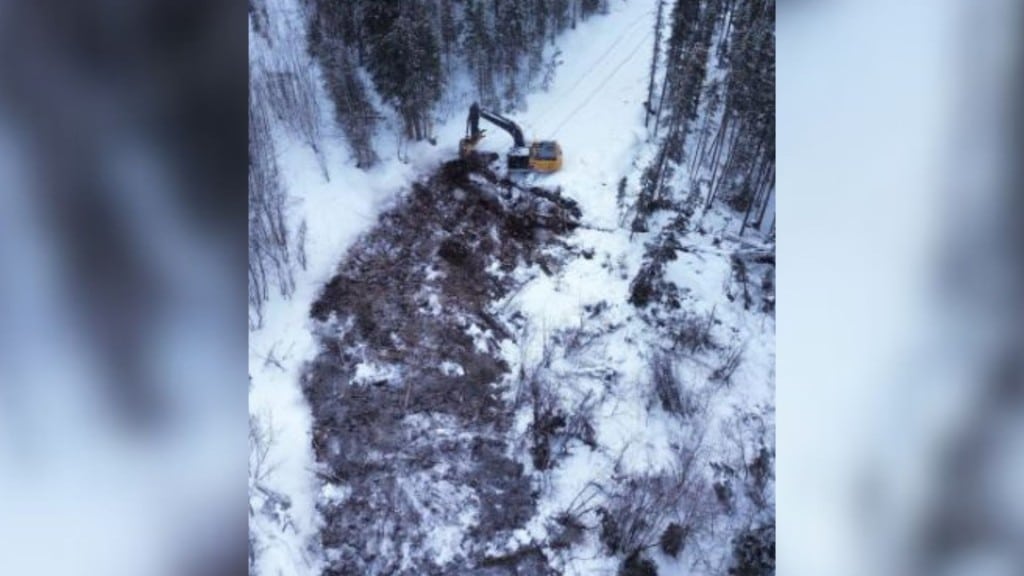
FORT NELSON, B.C. — Wild fire crews took advantage of winter weather conditions to mitigate the risk of overwintering wildfires reigniting.
According to the BC Wildfire Service (BCWS), wildfires in the Fort Nelson area had “smouldered” through the winter and are at risk of flaring up again when warmer weather sets in.
BCWS staff said natural fire barriers were no longer effective due to current drought conditions and “innovative” new measures were needed.
Local News Straight
to Your Phone
Download our app today!
Available on Android and iOS devices
“As these features failed, the need for constructed control lines grew,” said BCWS.
Fort Nelson fire zone staff developed a winter operation plan in the fall of 2024 to do suppression work and build fuel breaks.
This was done with engagement from local partners, industry contractors and provincial partners.
“Despite the logistical hurdles of working in remote areas at sub-zero temperatures like snowplowing, refueling and building ice bridges, equipment performance has met expectations,” said the service.
Latest Stories
As of April 9th, BCWS said heavy equipment crews have built 87 kilometres of access trails, fuel-free lines, helipads and machine guards over the past five weeks.
“The newly constructed helipads will allow access to remote hotspots during the spring and summer, helping crews suppress flare-ups more quickly and safely,” BCWS explained.
BCWS said the operations were done in winter because heavy equipment use was restricted in the snow-free season due to the risk of damage to the machinery and the environment.
“Misplaced lines could lead to sinking machinery, endangered personnel and wasted resources,” said BCWS.
The cold season method that was developed was inspired by other Canadian wildfire agencies and partners to conduct safer and more effective operations in the winter season.
“Frozen ground allows safer and more effective equipment operations,” said BCWS.
BCWS said operations are beginning to be reduced as the spring season approaches but it will continue to work and plan to support fire suppression.
“As we transition into a new fire season, we’ll continue evaluating the effectiveness of this initiative and refining it for the future,” BCWS concluded.
Stay connected with local news
Make us your
home page
Authors

Related Articles
Northeast B.C. communities to be given $86,000 for firefighting equipment
Tumbler Ridge, Pouce Coupe and the Northern Rockies Regional Municipality are the communities in northeast B.C. to receive funding for firefighting equipment from the Ministry of Emergency Management and Climate Readiness.
Wildfire training sessions to help northeast B.C. avoid ‘dangerous positions’
North America Fire Rescue is set to host wildfire training sessions in Chetwynd and Fort St. John this spring.
BC Wildfire Service readies for 2026 season with record 2,400 firefighter applications and more equipment in Prince George depot
The BC Wildfire Service has received around 2,400 firefighter applications and improved its equipment depot in Prince George in preparation for the wildfire season 2026, it said in a press release.