
Chiefs tell B.C. court LNG project threatens salmon rights
Gitanyow Hereditary Chiefs are seeking to overturn a decision by the B.C. Environmental Assessment Office about the Ksi Lisims LNG project.
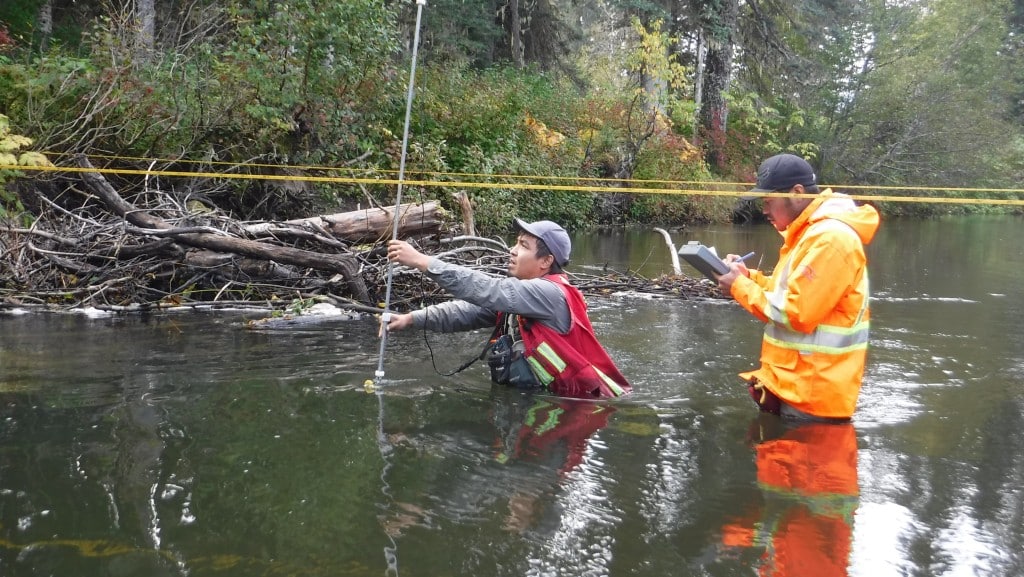
A proposed northern British Columbia liquified natural gas (LNG) project is facing a court challenge over its impact on the environment.
The proposed Ksi Lisims LNG project would see a terminal built at the mouth of the Nass River and be fed by the Prince Rupert Gas Transmission (PRGT) pipeline, which would start near Chetwynd.
Gitanyow Hereditary Chiefs are seeking to overturn a decision by the B.C. Environmental Assessment Office that didn’t include the Gitanyow in discussions about the project.
In a February hearing, following a petition filed in October, Gitanyow told a B.C. Supreme Court Justice the provincial government’s decision to exclude Gitanyow from consultations on the building of the LNG project violates its rights.
The first Nation said the project would disrupt delicate salmon habitats the Gitanyow rely on for food and cultural practices
The project is jointly proposed by Rockies LNG Partners, Texas-based Western LNG and the Nisga’a Lisims Government.
The assessment office said it is unable to comment as the matter is currently in court and Ksi Lisims LNG has yet to respond to an email inquiry.
Latest Stories
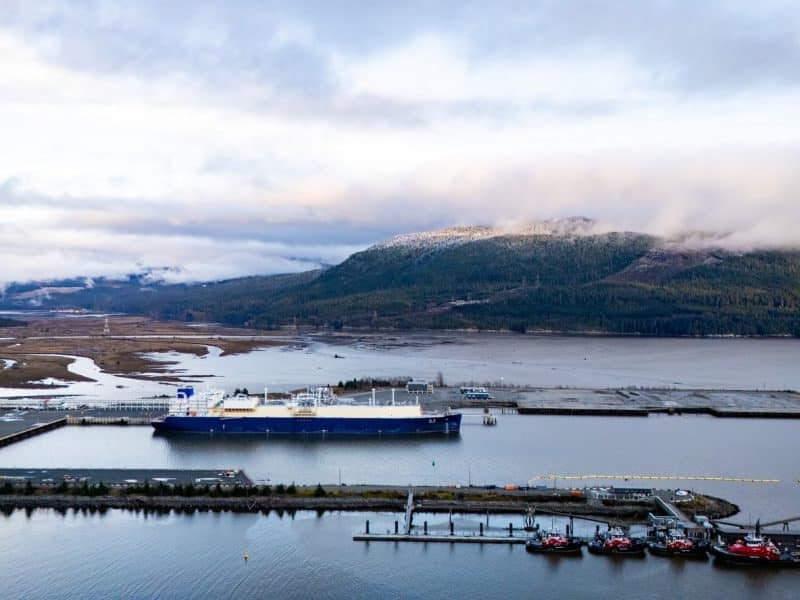
The Ksi Lisims LNG terminal, where gas from the PRGT pipeline will be cooled and shipped overseas, will be at a site called Wil Milit, off Pearse Island in northern B.C.
Studies have shown juvenile salmon found in the area of the LNG facility could be migrating from different parts of the Nass River watershed, including Gitanyow territory, to the Pacific Ocean.
“If they do migrate from Gitanyow territory, there will be an impact to our fisheries,” said Tara Marsden, Wilp sustainability director for the Gitanyow Hereditary Chiefs.
Gitanyow’s legal challenge alleges the environmental assessment process – which concluded consultation with the Gitanyow wasn’t necessary because the LNG project did not affect its lands or rights – was fundamentally flawed.
“The government’s been very intransigent in its response: ‘We have no duty to consult you. We’re going to take care of the fish. Don’t worry if there’s any impact, we will mitigate them’,” Marsden said.
Arguments against consulting with Gitanyow First Nation included the assertion that its territory — 80 kilometres from the site — is too far from the project, she added.
However, the Haida Nation, which is more than 100 kilometres away but lays claim to waters closer to the LNG site, was consulted.
The government “threw everything at the wall” to avoid meaningful consultation with Gitanyow, Mardsen alleged.
She would like to see research – such as genetic testing on juvenile salmon in the project area or an analysis of the bull kelp habitat critical to juvenile salmons’ survival – before the project goes ahead.
Michael Price, a conservation scientist expert who works in the Nass and Skeena watersheds and was asked by Gitanyow to review the assessment, said the office’s conclusion is “premature and scientifically indefensible.”
He also alleged there is no plan in place to mitigate the destruction of salmon habitat.
As part of its land and environmental protection, Gitanyow has had a land use plan with the provincial government since 2012.
The Gitanyow Lax’yip land use plan is a comprehensive framework to protect the territory’s ecosystems and support sustainable development.
Additionally, Gitanyow has its own governance process, the Wilp Sustainability Assessment Process, where any project on Gitanyow lands or affecting its rights must go through consultation and consent.
Despite these protections, the Gitanyow was allegedly not notified about the Ksi Lisims LNG project, which the Chiefs say breaches not only their rights under Canadian law, but also their own governance.
Three decisions
The future of the pipeline and terminal project will be determined by three key decisions.
First, the province must assess whether the pipeline project has met the “substantial start” criteria.
If the project is deemed to be substantially underway, it could bypass further consultation and limit Gitanyow’s involvement in the environmental assessment process.
Gitanyow argues the project is not substantially underway and the initial environmental certificate that greenlit the project has expired and is therefore invalid.
While Gitanyow has issued a court challenge against the terminal project, a number of participating First Nations are working through their own environmental concerns through the assessment office’s dispute resolution process.
Complaints by the Lax Kw’alaams Band, Metlakatla First Nation and Gitga’at First Nation have caused the environmental assessment to pause until the disputes are resolved.
“There’s a growing number of Indigenous nations who are now concerned or opposing both the terminal and the pipeline,” Marsden said.
The third decision is the forthcoming ruling by the courts on the Gitanyow challenge, expected next month.
If the court rules in favour of Gitanyow and decides the government ignored its consultation duties, it could pause the environmental assessment and allow Gitanyow to have a government-to-government dialogue with the province, Marsden noted.
It could also set a precedent for future consultations with Indigenous Nations on similar projects.
But if the court rejects Gitanyow’s application, the project could proceed.
“We’re in court to fight for our way of life,” said Simogyet Malii/Glen Williams, a Gitanyow Hereditary Chief. “If this project is built, we will lose our salmon habitats and at-risk Chinook salmon will be pushed even closer to extinction.”
This comes after a coalition of Indigenous and non-Indigenous groups accused the BC Energy Regulator (BCER) in court of bending its own rules to green-light construction of the PRGT pipeline.
The group alleges clearing work for the 800-kilometre pipeline began last August before a legally-required assessment of the health of the land, water and wildlife was conducted.
Stay connected with local news
Make us your
home page
Related Articles
Blueberry River First Nations signs revenue-sharing agreement with pipeline construction company Strait
The agreement with Strait announced in April means the company will be the official pipeline and mechanical contractor partner to Blueberry River First Nations

Report suggests a gap in B.C.’s ‘sustainable workforce planning’
A recent report from the Pembina Institute suggests a gap in B.C.’s “sustainable workforce planning”