
Final report from government forestry authority suggests stronger protections for heritage sites
Forest Practices Board released its report following a 2023 complaint from Halfway River First Nation.
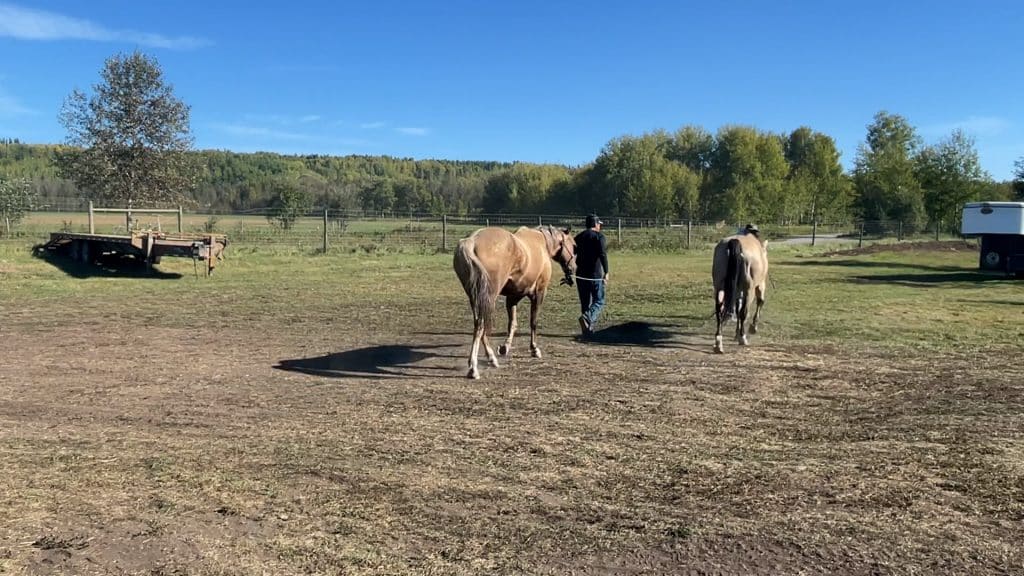
FORT ST. JOHN, B.C. — The final analysis from a forestry watchdog says the provincial government did not follow regulations in approving two livestock range use plans near a First Nation’s territory.
On March 18th, the Forest Practices Board (FPB) released its report into a complaint from Halfway River First Nation (HRFN), according to a news release.
The FRB says the land range use plans exceeded a period of five years, violating the Forest and Range Practices act.
Local News Straight
to Your Phone
Download our app today!
Available on Android and iOS devices
In 2023, HRFN complained about livestock damaging mineral licks and displacing wildlife in its territory near where the Nation’s rain, snowmelt or runoff drains into the Halfway River, known as a watershed.
The FPB investigated two range agreement holders and the Ministry of Forests to assess compliance with legal requirements.
Examining records for a decade starting in 2013, the report says the agreement holders did meet requirements for riparian areas and the government did not require any enforceable safeguarding of culturally significant sites.
FPB chair Keith Atkinson says the government felt “it was unable to compel” the agreement holders from protecting the sites in question.
Latest Stories
“To help protect natural habitat and cultural heritage resources, the province could take action to make the protections outlined in range use plans enforceable,” said Atkinson.
“[The] government should also consider how the review and approval of range use plans include engagement with First Nations, and require that plans identify and outline how cultural heritage resources will be protected.”
Complaints about the Nation’s drinking water were also examined by the FPB, with the authority saying there were concerns about the government’s handling of the situation.
Atkinson said protecting source drinking water and ensuring the public’s safety was “critical.”
“We encourage natural resource officers to review their investigation into livestock congregating in the Halfway River and identify where improvements can be made,” added Atkinson.
The press release concludes with an agreement by the provincial government to address HRFN’s concerns, including expectations for range agreement holders to protect and monitor cultural and ecological values.
The full report can be found on the FPB’s website.
Energeticcity.ca contacted HRFN Lands Department but did not immediately receive a response. This story will be updated as information becomes available.
Stay connected with local news
Make us your
home page
Authors

Related Articles
Dawson Creek Business Facade Program opens for grant applications
The City of Dawson Creek is looking for applications from local businesses for its 2026 Business Facade Program and the deadline for the first intake is May 1st.
Closure of Site C workers camp fast approaches as future of structures remains uncertain
The workers camp adjacent to BC Hydro’s hydroelectric dam Site C is set to close on March 31st, but the organization is “confident” it will be able to repurpose as many assets as possible.
The great potato giveaway: Métis society looks to distribute 55,000 lbs of potatoes
Some 55,000 lbs of potatoes were given to the Fort St. John Métis Society through the Second Harvest program.