
Black History Month: Mother and son’s experiences with school inclusivity
Black History Month is never far from the mind of Fort St. John mother Danielle Peloquin and her son Yamadou Diallo.
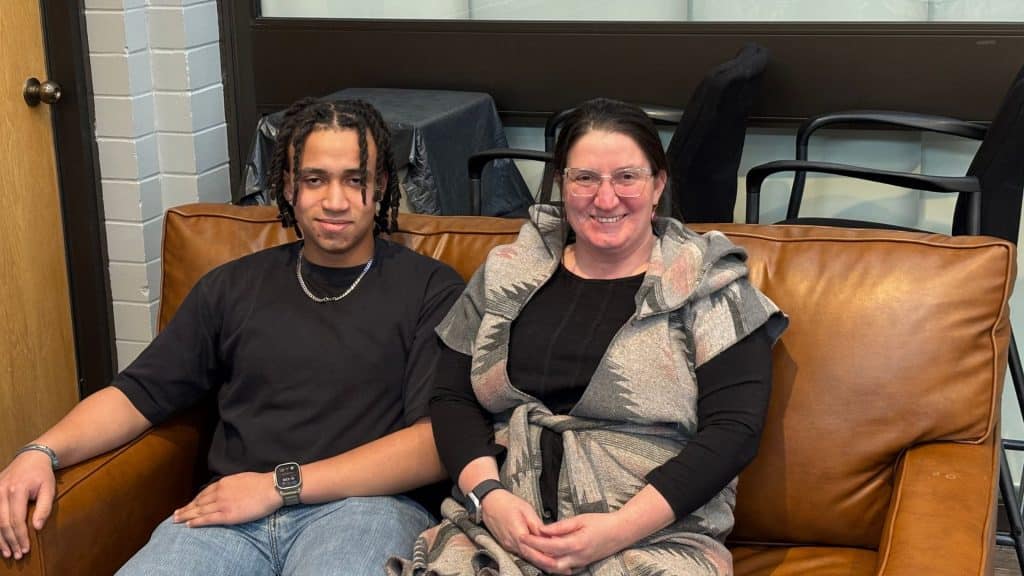
FORT ST. JOHN, B.C. — Black History Month is never far from the mind of Fort St. John mother Danielle Peloquin.
The month, which is marking three decades of recognition in Canada, is personal: she has two children of a biracial ethnicity and she is of Francophone descent.
She sits to talk in the Northern Lights College atrium and tells her story of moving to Fort St. John.
Local News Straight
to Your Phone
Download our app today!
Available on Android and iOS devices
Initially born in Manitoba, she moved to the area with her family in the mid-1990s. The 48-year-old graduated from North Peace Secondary School (NPSS) in 1995.
She talks about how she met her ex-husband: On a vacation with her sisters in 2004 in Spain, she met Abdoulaye Diallo. A native of the African nation of Mali, she went out with him after her siblings had retired to their rooms for the evening.
While he did not speak English and she did not speak French, their common understanding of Spanish broke the language barrier.
“We had a lot in common,” recalls Peloquin. “We really liked the outdoors. A lot of mutual commonalities, like family ideals.”
Latest Stories
Peloquin said her Spanish “was not as good” as Diallo’s. After living in Europe for approximately six months, the couple married in 2005 and lived long-distance for a period before he came to Fort St. John in 2006.
“I just decided the way of life in Spain wasn’t [how] I wanted to raise children,” said Peloquin.
Diallo and Peloquin moved back and forth between Fort St. John and Prince George, where he took English lessons at the Immigrant and Multicultural Services Society.
According to Peloquin, Diallo did not encounter prejudicial problems. Finding work at Walmart, he eventually moved on to a career in construction.
Peloquin says the couple eventually split up, but not due to cultural differences. They still are “great co-parents” to their two kids, including 17-year-old Yamadou Diallo, who currently attends NPSS.
“I know this community. There were a few families that adopted black children who are adults now,” said Peloquin. “A woman once asked where I adopted my children, assuming it was okay.
“[It was] in the summer, when I was a volunteer in the community garden. It was somebody volunteering who asked. [They] just didn’t have much experience outside this community, and [just] didn’t know any different.
“I said ‘no, these are my kids.’ [They] learned something from that. Maybe [they] won’t ask something like that to somebody ever again.”
Looking at her son, Peloquin says racism is becoming more prevalent in 2025.
There have been recent incidents in northern B.C., including Nazi graffiti spray painted on the walls of the Treaty 8 building and a teacher in Prince George being placed on leave for using a racial slur in the presence of a student.
“When I came in [1993], I think there was one black family,” said Peloquin. “But there has been immigration here and things have changed. It seems to be a lot more hostile now.”
Yamadou Diallo: ‘It’s been rough’
Both of Peloquin’s sons have split their time between being homeschooled and attending SD60 schools.
With a skin tone reflecting his biracial identity, the young man speaks. His hair flows from either side of his head, showing braids.
When asked about his school experience, the grade 11 student takes a deep breath and says his experience in high school has “been rough.”
“I feel there’s a lack of acknowledgement for problems we’ve been having,” says Yamadou. “Kids just not knowing what is socially acceptable.
“[Fellow students] making small jokes and stuff. About race, about everything. Over the school year, it breaks down into less funny jokes and more hateful, violent stuff.”
He points to an instance when he was in ninth grade at a different school where a fellow student scolded him for his skin colour.
“This one guy, he would joke about race trying to be edgy,” recalls Yamadou. “One day, in the middle of class, he sat across from me. He basically scolded me for being black for 30 minutes.
“He was just trying to be [an] antagonist. He was trying to weaken me mentally.”
Yamadou felt reporting the incident was pointless because “nothing changes.”
He also says his brother experienced an alleged racial incident at the North Peace Energetic Learning Campus (ELC) in late December.
A statement by the ELC vice-principal Lori Coulter said teachers have received resources to share with their students about Black History Month.
She said the incident cited involved “individual students” and could not comment further.
Yamadou believes an assembly focusing on Black History Month on February 27th at NPSS will be the school’s first.
He says the entire event was coordinated by students.
Petrucci: ‘We absolutely promote diversity’ in School District 60
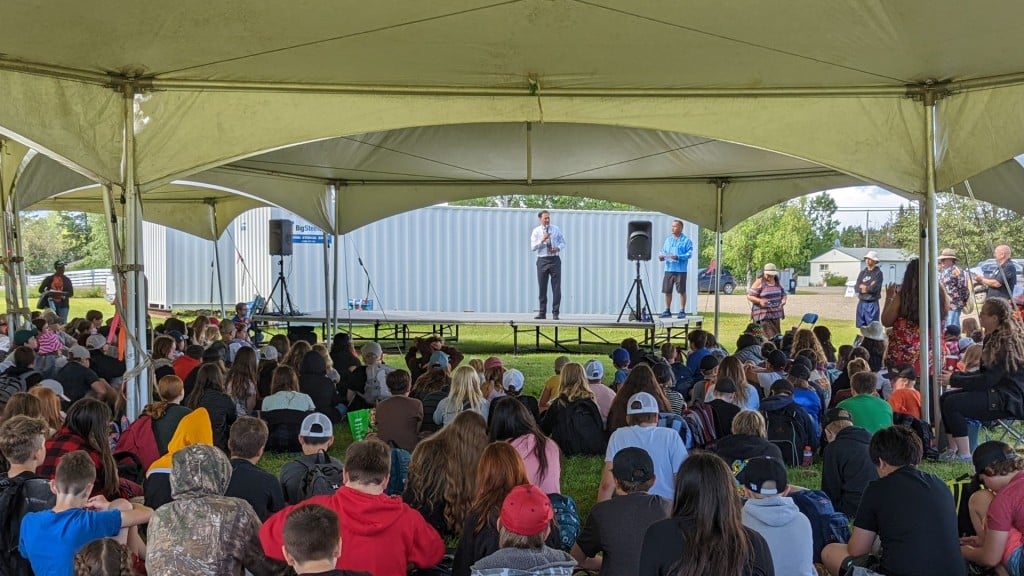
School District 60 (SD60) Superintendent Dr. Stephen Petrucci describes Fort St. John as “home” for the past three decades.
Originally from Vanderhoof, he settled into his first teaching job in the area in the mid-90s. Petrucci has been superintendent since 2019.
With a large Indigenous community and an influx of students from differing cultures, he says SD60 schools have an absolute responsibility to promote diversity.
“I’ll be the first to admit there are racial and discriminatory incidents [that] have taken place,” said Petrucci. “What’s important is how we respond as a system to it.
“I think we absolutely promote diversity. It’s extensive in our schools and seen in a variety of ways. We have language days and specifically for Black History Month, [schools] do hold events.”
Examples include the NPSS assembly or Dr. Kearney Middle School where an assembly honouring the month was marked in 2024.
Petrucci says when it comes to learning pathways about diversity, SD60 is in the “business of education” to teach students and their families to be accepting of diverse backgrounds.
Resources such as the Settlement Workers in Schools (SWIS) program, which reaches out to new immigrant families in the area, are pivotal in establishing connections both inside the walls of schools and outside.
In an era where social media how most students consume their information, Petrucci says it can be an “obstacle” in establishing and constructing relationships where students can understand one another.
Petrucci says a conversation with black students about mental health is also something which “is more concerning” than before.
“We’re in this position of both privilege and responsibility to have to provide an education to students,” said Petrucci. “We’re seeing a very polarized world out there. There are [lots] of factors.”
Petrucci said he will be releasing a summary of Black History Month events within the walls of SD60 schools in March’s Superintendent’s report, scheduled to be released March 10th.
Stay connected with local news
Make us your
home page
Authors
Related Articles
Fort St. John RCMP apprehend wanted man
Jared McColm, 30, who had been wanted since March 13th in Fort St. John, has now been arrested.
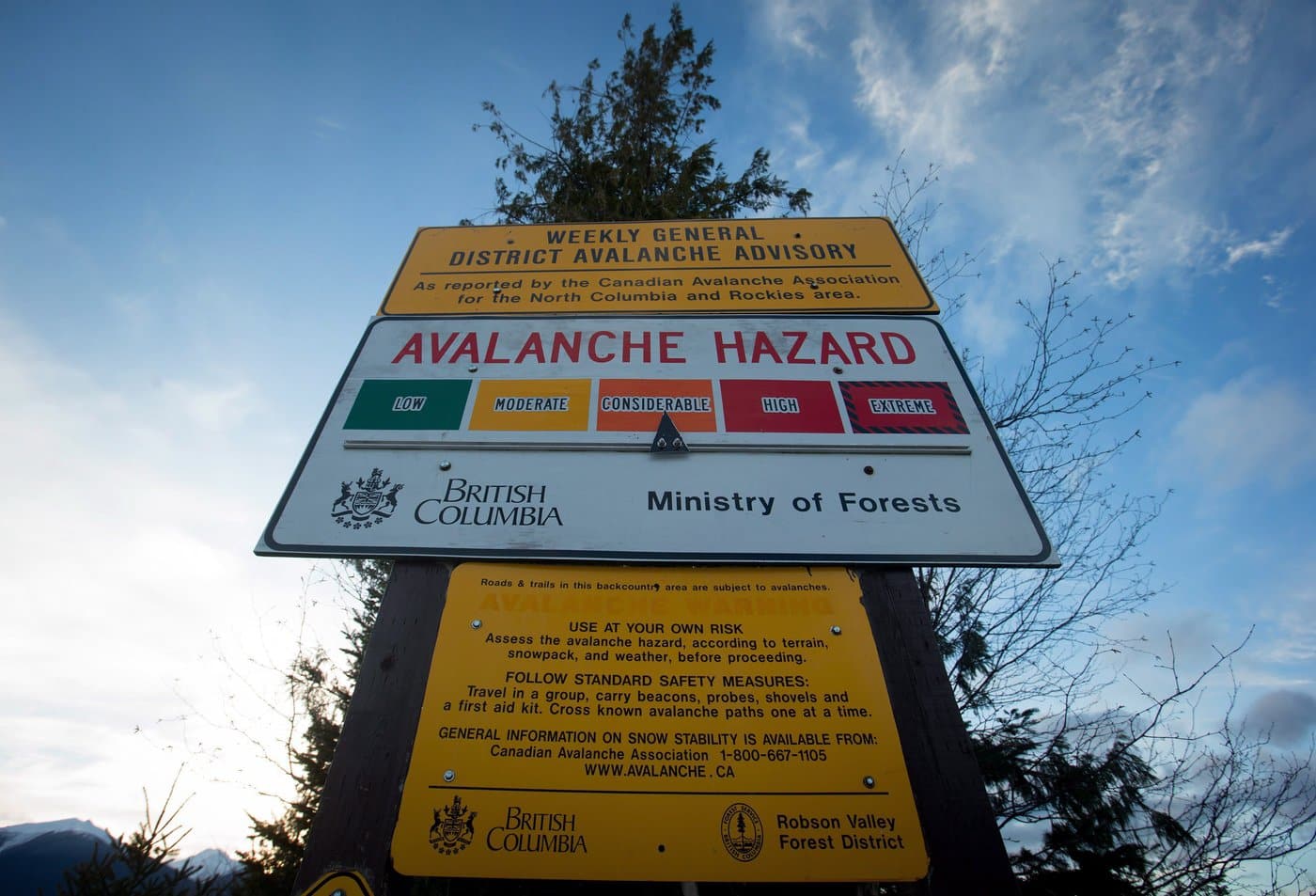
Avalanche risk rated ‘considerable’ to ‘moderate’ following snowfall warning
‘Considerable’ to ‘moderate’ avalanche warnings are being reported by Avalanche Canada on March 25th in areas of the Peace River region after recent heavy snowfall.
MP recounts heroism of girl, 12, who passed last message of Tumbler Ridge victim onto his parents
Conservative MP Bob Zimmer called 12-year-old Christina a “hero” after she tried to protect two of her classmates during the Tumbler Ridge school shooting in February 2026.