
‘Big mills will close’: Expert’s warning over looming U.S. tariff hike
Experts expect forestry companies to leave BC if U.S. President Donald Trump carries out his threat to introduce tariffs next month.
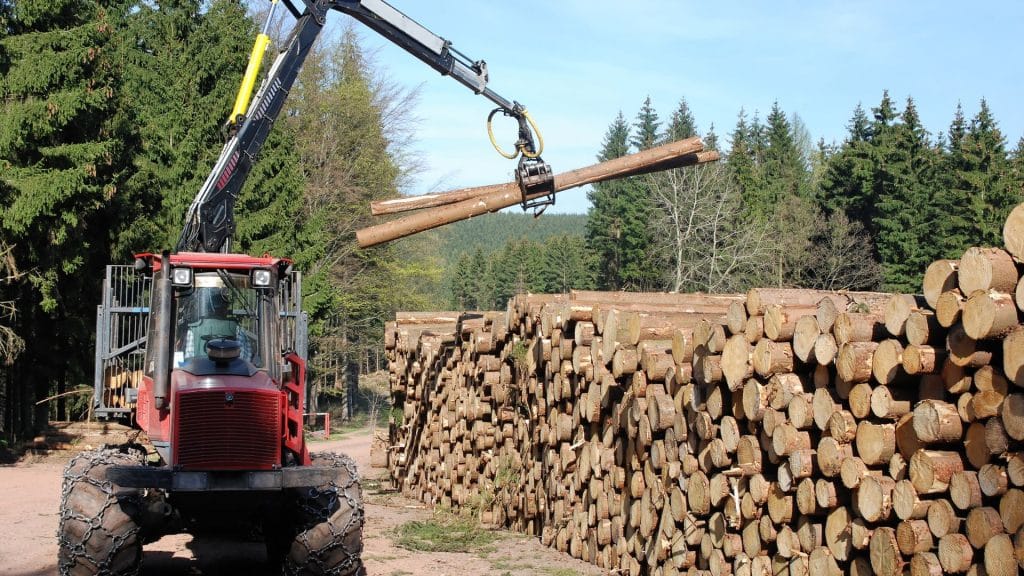
FORT ST. JOHN, B.C. — Experts expect forestry companies to leave B.C. if U.S. President Donald Trump carries out his threat to introduce tariffs next month.
The threats come as Canadian forestry employers say they’re already grappling with challenges including declining forest health and existing U.S. tariffs of at least 14 per cent.
The economic pressures are spurring a wave of thousands of forestry job losses across the province.
Last fall, hundreds of forestry workers in northern B.C. lost work when Canfor closed its mills in Vanderhoof and Fort St. John, citing challenging market conditions and a U.S. tariff hike.
Statistics Canada data shows that since the turn of the century, Canada has lost about 30,000 forestry sector jobs — about a third of which were in B.C.
This week, Trump paused the implementation of the 25 per cent tariff on all Canadian non-oil exports for 30 days.
Industry experts say if the tariffs go ahead, even more workers’ jobs are in jeopardy.
Latest Stories
“Tariffs aren’t new, but in terms of the impact on our members, it’s terrible,” said Jeff Bromley, Wood Council chair for the United Steelworkers union.
USW represents about 14,000 forestry workers across the province. Bromley said the tariffs make it harder for forestry companies to make a profit on exports to the United States and thus harder for members to continue to earn a living in their communities.
“We’ve all been lighting our hair on fire since the election in the United States finished and Donald Trump’s tariff threat,” he said.
Canadian forestry employers are heavily dependent on U.S. trade.
According to the BC Lumber Trade Council, about 65 per cent of softwood lumber production in B.C. is exported to the United States.
Bromley said increasing tariffs are a big factor pushing big forestry players to close mills and tighten operations in northern B.C., putting hundreds of jobs in jeopardy.
According to the United Steelworkers, Vancouver-based logging giant Canfor has closed 10 of 13 mills it had in B.C. over the past decade.
Canfor did not respond to requests for comment.
Mike Egli is co-owner of Dalchako Transport, a logging contractor in Vanderhoof. He said when the sawmill closed at the end of last year, “it sure didn’t look very good”.
“Obviously, more tariffs don’t help,” Egli said. “If [mills] can’t make a profit selling logs and shipping them wherever to sell them, then they can’t stay open.”
Since the new year, Egli has pivoted the business to transport lumber to other mills in northern B.C.
Christopher Gaston, a forestry and economics associate professor at the University of British Columbia, said high tariffs were already challenging big forestry players to operate in the province.
Large forestry companies like Canfor make their money selling large amounts of lumber to U.S. buyers for a slim profit margin, according to Gaston.
He said raising tariff pressure will likely encourage them to move their business out of B.C.
“I can’t imagine any British Columbia company will be able to ship lumber for any kind of a profit; it would be at a loss,” he said. “The big mills will close down.”
Still, Gaston said there may be a silver lining. B.C.’s forest industry is already shifting into the hands of smaller and Indigenous-owned companies, which are better equipped to manage the province’s volatile forest supply.
Tariffs will up the pressure on smaller companies to create wood products from their harvest, instead of solely shipping raw lumber, Gaston said. That would mean building lumber processing infrastructure and facilities in Canada to add value to raw lumber.
“There’s a lot of pain associated with that,” he said. “We can’t just go from being a commodity producer to being more value-added oriented overnight, but ultimately, I think it’s the right thing for Canada to do in the long run.”
This comes as a new provincial advisory council has been created in an effort to “advance British Columbia’s interests” amid concerns surrounding trade disputes between Canada and the United States.
Stay connected with local news
Make us your
home page
Related Articles
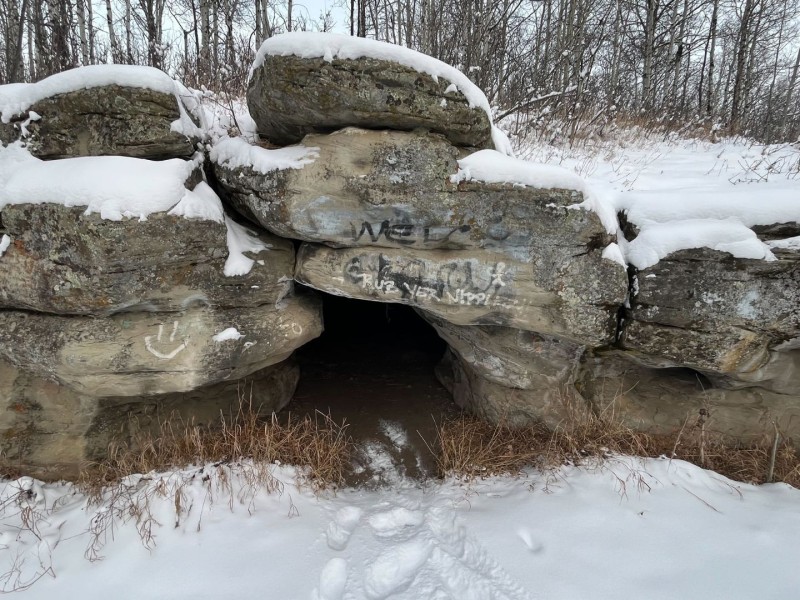
Live-streamed event to explore history and discoveries at Charlie Lake’s Tse’k’wa cave
The live stream about the Tse’k’wa National Historic Site will happen at University of Northern British Columbia (UNBC) in Prince George on January 22nd, hosted by Dr. Farid Rahemtulla and Richard Gilbert.

‘Kiara’s Law’: Petition calling for legal changes after Dawson Creek woman’s death in Mexico hits 1,000 signatures
A petition started in memory of Dawson Creek’s Kiara Agnew, who died in Mexico in 2023, has received 1,000 signatures. It requests the House of Commons introduce new legislation coined ‘Kiara’s Law.’

Fort St. John couple seeks backers to create suicide prevention awareness vehicle
Justin and Brianne Lagasse plan to raise awareness around suicide prevention in Fort St. John through a wrapped car.