
‘$2.2 billion at risk in BC’ from new homes in flood and wildfire areas, report claims
$2.2 billion is being put at risk from house building in wildfire and flood-risk areas in British Columbia, a new report from the Canadian Climate Institute says.
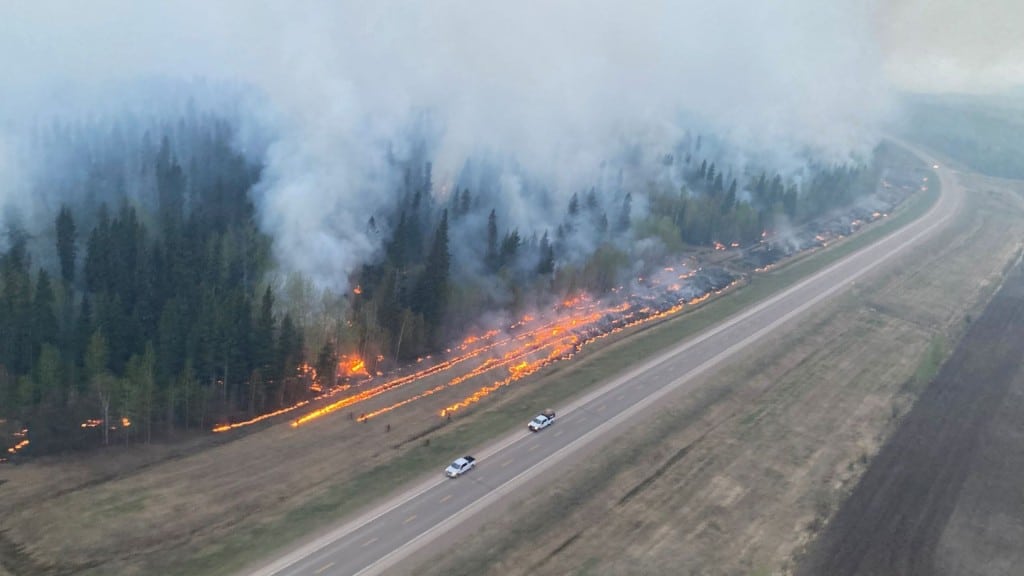
FORT ST. JOHN, B.C. — Countless homes and billions of dollars are being put at risk from building in dangerous areas in British Columbia, a new report says.
The findings are detailed in the “Close to Home: How to Build More Housing in a Changing Climate” report released in February 2025 from the Canadian Climate Institute.
B.C. remains at high risk of wildfires despite seeing a decline last year. One notable wildfire of 2024 includes was in Fort Nelson, and it forced the town to evacuate to Fort St. John and other communities.
In a worst-case scenario, British Columbia faces the biggest expenses in Canada, totalling $2.2 billion annually, the report claims.
“Canada is becoming a riskier place to live, work and insure due to the substantial risks that severe weather events exacerbated by climate change pose to our families, communities and economy,” says Jason Clark, national director of climate change advocacy at the Insurance Bureau of Canada.
According to the report, several Canadian governments are working to build new homes in areas where floods or wildfires can strike.
This risks up to $3 billion per year in costs for rebuilding and disaster relief, unless the policy is improved, the report says.
Latest Stories
“Building more homes in unsafe places would be an incredibly costly mistake,” says the institute’s president, Rick Smith.
The report says by 2030, 540,000 homes could be built in flood-hazard areas and more than 220,000 homes in high wildfire-hazard areas.
“The most affordable home is the one you don’t have to rebuild after a disaster,” says Ryan Ness, director of adaptation at the Canadian Climate Institute.
“Governments across Canada can save billions of dollars each year and keep people safe from disasters by building just a small percentage of new homes away from the highest-risk areas for wildfires and floods.”
Other provinces’ annual rebuilding and relief costs could include $360 million in Manitoba, $220 million in Alberta, and $214 million in Quebec.
The report uses the original models of financial costs for the new housing slated for construction by 2030.
“This landmark report is the first of its kind to show the costs of building new housing in areas prone to wildfires and floods. Fortunately, there are ways to build millions of much-needed homes that avoid these future costs,” said Smith.
The report says redirecting just three per cent of the new homes is expected to save 80 per cent of all losses by 2030. This is due to a small number of homes being built in the most hazardous zones.
Recommendations in the report include expanding screening measures for housing programs and enacting land use regulations that move development away from dangerous areas.
Other recommendations include redesigning assistance programs to discourage construction in hazard zones and working with Indigenous communities to support the building of climate-resilient homes in low-risk areas.
“Solving Canada’s housing crisis requires not just building more homes but ensuring they’re affordable in the long term. This includes building new homes in safe locations that are resilient to increasingly severe floods and wildfires,” says Lisa Raitt, vice-chair of global investment banking at CIBC.
The full report can be found below:
Stay connected with local news
Make us your
home page
Authors

Related Articles

Award-winning Indigenous activist to be keynote speaker at Spark conference
Ashley Callingbull is an actress, model and First Nations activist who will make a keynote appearance at the Spark Women’s Leadership Conference in Fort St. John in 2026.
‘Absolute betrayal’: First Nations blast Eby in leaked transcript of DRIPA meeting
A leaked transcript of a meeting between Indigenous leaders and British Columbia Premier David Eby, about his plan to suspend the province’s Declaration on the Rights of Indigenous Peoples Act,…
Peace River North MLA to meet with minister about Taylor Bridge
Peace River North MLA Jordan Kealy said he is in the process of scheduling a follow-up meeting with Mike Farnworth, B.C. minister of transportation and transit, to discuss the Taylor Bridge.