
95 million-year-old tracks unearthed in Tumbler Ridge
A new press release from the Tumbler Ridge Museum says the work by scientists Dr. Charles Helm and Dr. Roy Rule suggests the discovery of dinosaur tracks in the area known as Magnoavipes.
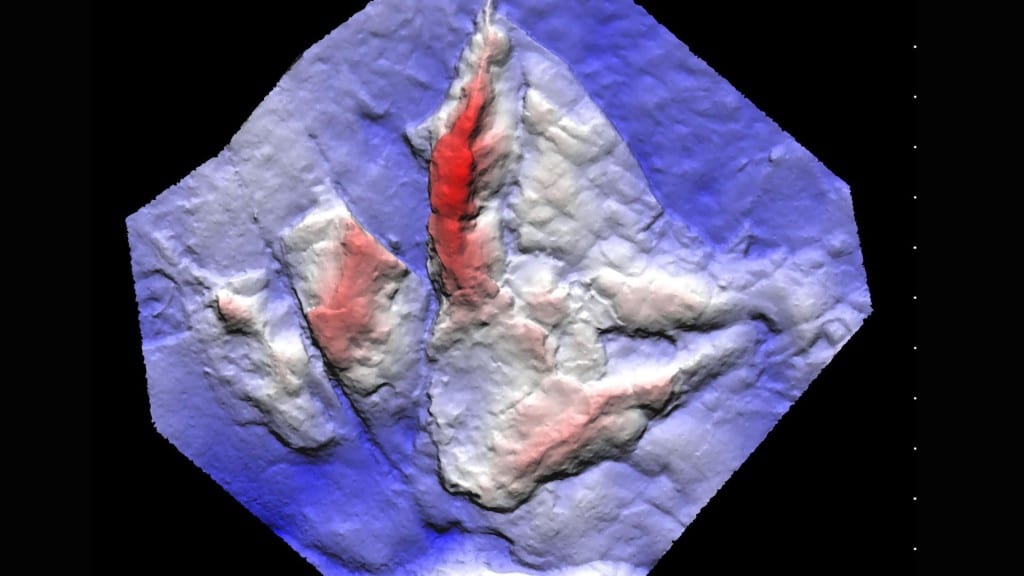
TUMBLER RIDGE, B.C. — A new press release from the Tumbler Ridge Museum says the work by scientists Dr. Charles Helm and Dr. Roy Rule suggests the discovery of dinosaur tracks in the area known as Magnoavipes.
Native to the Cretaceous era, some 150 million years ago, Manoavipes is derived from Latin, meaning ‘big-bird foot.’
However, a paper recently published in the ornithological magazine British Columbia Birds says these tracks might not have been made by a prehistoric bird but rather a dinosaur with bird-like characteristics known as ornithomimid.
Local News Straight
to Your Phone
Download our app today!
Available on Android and iOS devices
The paper says only three Magnoavipes tracks, all within the district of Tumbler Ridge, have been discovered across Canada, and they are about 95 million years old.
“It was possible to recover one of these by canoe from its riverside location, transport it across the river, into the back of a truck,” reads the release from Wednesday, November 20th.
“[From there] it was safely transported to the Tumbler Ridge Museum.”
Measuring between 22 and 25 centimetres, the tracks were found in a “track-rich” area which also included tracks from crocodiles, turtle tracks, and dinosaur tail drag races and tracks.
Latest Stories
“Each one of these can be regarded as a miracle of preservation,” says the release.
The museum’s statement concludes that “floods and spring thaw” can destroy the traces or carry them downstream, and “underlying the recovery of the tracks whenever possible is important.”
For further information on the Tumbler Ridge Museum, visit their website or Facebook page.
Stay connected with local news
Make us your
home page
Authors

Related Articles
City to host celebration of walking track sponsorship renewal
The City of Fort St. John is hosting an event to celebrate a renewed 15-year sponsorship licence for the walking track inside the Pomeroy Sport Centre.

Energeticcity.ca Weekly Review: Community Events Calendar
In this edition of the Weekly Review, get ready for our new Community Events Calendar. Plus, the most-read stories of the week.

Tumbler Ridge loses out on Kraft Hockeyville
The District of Tumbler Ridge lost out to the town of Taber, Alberta, who will get $250,000 toward arena upgrades and an NHL preseason game.