
Indigenous filmmaker Ryan Dickie talks wildlife, heritage, and documentary films
With the film “Tea Creek” being streamed on CBC Gem and “The Medzih Story: Restoring a Caribou Landscape” being screened in Fort Nelson this week, it’s safe to say 2024 has been a monumental year for Ryan Dickie.
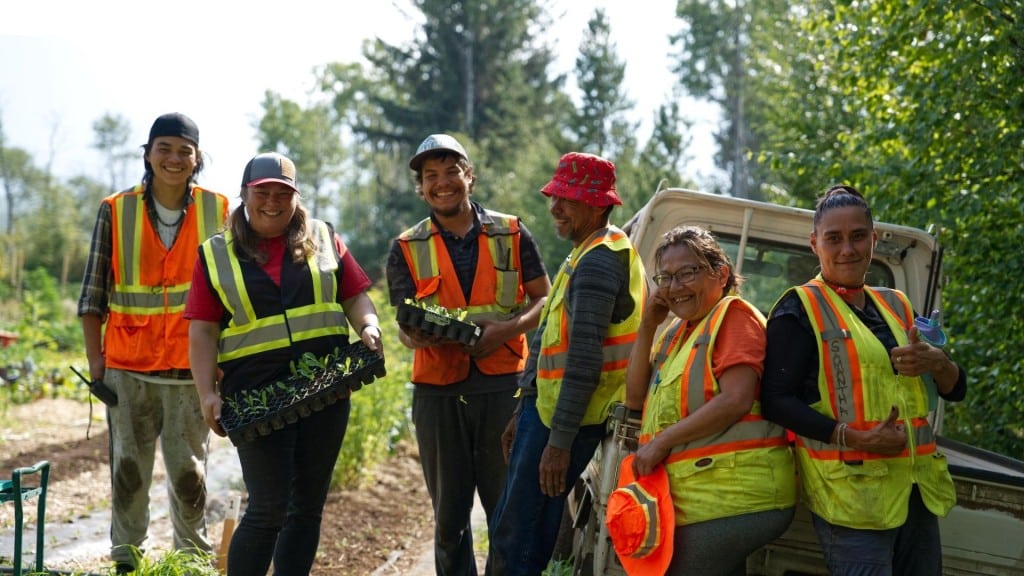
FORT NELSON, B.C. — With the film “Tea Creek” being streamed on CBC Gem and “The Medzih Story: Restoring a Caribou Landscape” being screened in Fort Nelson this week, it’s safe to say 2024 has been a monumental year for Ryan Dickie.
A member of Fort Nelson First Nation, Dickie was a guest on a recent episode of Before the Peace with Chris Walker, where he spoke about his photography and filmmaking career.
Formerly employed in the oil and gas industry, he described taking up wildlife photography as a “hobby,” which eventually evolved into directing.
Local News Straight
to Your Phone
Download our app today!
Available on Android and iOS devices
He cites his father, Renald, and his love of action and sports films as an influence.
“[My family] has a long history in this area,” said Dickie. “I grew up with a love of the land, and started documenting those experiences with my still camera.”
“My father was a photographer himself, and an avid trapper growing up. He was always taking a camera along on these family trips out on the trap line. I grew up remembering those moments flipping through his photo albums.”
“[I was] amazed with some of the beauty he could capture in our territory.”
Latest Stories
Throughout the 40-minute conversation, Dickie touched on his projects, including “Tea Creek.” The film recently screened in Ontario in October.
The story, which took three years to produce, tells the efforts of Jacob and Jessica Beaton, a farmer working to establish an Indigenous-led food sovereignty training hub near Kitwanga, B.C.
He described the work done on the project as “amazing,” adding that the all-in-one initiative serves as a “healing centre” for the people who walk through its doors.
“Originally, it was going to be three projects on food sovereignty in the north,” explained Dickie. “But there was so much going on at Tea Creek, and the impact was so far-reaching, that we pivoted and decided to create a feature film on their work.”
Dickie says in the information age, more Indigenous youth and younger generations are needed to tell community stories about the culture.
“I think back to my grandparents’ time. There was a bit of apprehension about sharing our knowledge,” said Dickie. “Our older generation is starting to pass on. When you lose an elder, that knowledge goes along with them.”
“Being able to document and capture their stories is really critical right now.”
The entire episode can be streamed on leading podcast platforms, including Spotify.
Stay connected with local news
Make us your
home page
Authors

Related Articles

Fort St. John Métis Society looks to gather delegation for national event
The Back to Batoche Métis gathering takes place from July 16th to 19th in 2026, and the Fort St. John Métis Society is looking to send about 20 members.
Long-standing Spirit of the Peace Pow Wow president resigns
Connie Greyeyes has resigned from her position as board president of the Spirit of the Peace Pow Wow.

Attempt to withdraw guilty plea in Tsay Keh Dene double murder case denied
Orlan Marcel Dennis’ appeal to withdraw his guilty plea was denied by Justice Simon Coval on March 9th. He has yet to be sentenced for the second-degree murder of his wife and son in 2024.