
FNFN unveils progress on Tu-Deh-Kah geothermal project
Members of the Fort Nelson First Nation (FNFN) community were treated to a community dinner and an update on the latest in the Tu-Deh-Kah geothermal project on Monday, October 1st.
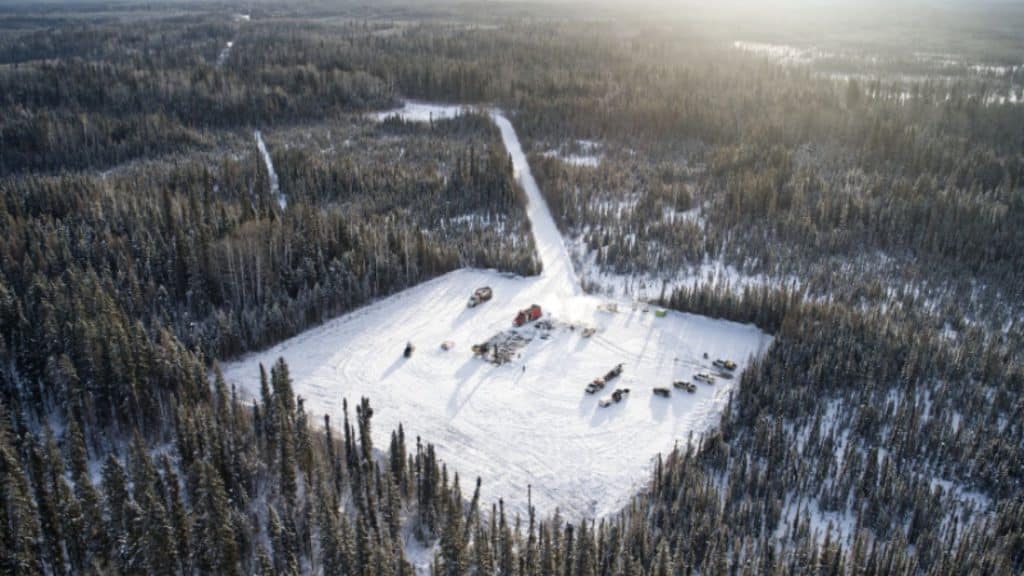
FORT NELSON, B.C. — Members of the Fort Nelson First Nation (FNFN) community were treated to a community dinner and an update on the latest in the Tu-Deh-Kah geothermal project on Monday, October 1st.
The project involves converting the Clarke Lake Gas Field, which is located approximately 14 kilometres southwest of Fort Nelson, into harvesting heat from highly porous Devonian carbonate in the ground.
According to Jim Hodgson, the project chief executive officer, the plan is to have five to six producing wells, to bring the hot geothermal brine up to the formation.
Local News Straight
to Your Phone
Download our app today!
Available on Android and iOS devices
The brine will then be run through a heat exchanger, where it will be converted into steam via a working fluid, most likely isobutane, due to its very low boiling point.
“Heat will come out the ground at around 114 to 120 Celsius,” said Hodgson. “It’ll flash the size of butane which will be converted into steam and generate power.”
Monday evening’s project at the Chalo Gym on FNFN grounds included Northern Rockies Regional Municipality Mayor Rob Fraser and councillor Leslie Dickie as well as members of the Tu-Deh-Kah administrative team.
It also included former chief Curtis Dickie, who was FNFN lead when initial plans were unveiled in 2019.
Latest Stories
After buying the site from Tallahassee Energy, they tested the theory using a high-volume pump test in 2021.
“When you do a geothermal project, you need to do two things: to determine if it’s bankable and if it’s even technically feasible,” explained Hodgson.
“Our tests did indeed show it could deliver 70-80 litres per second of hot brine to the surface and then put it back into the ground. So it’s very prolific.”
Further tests in 2022 proved the energy can be sustainable. Hodgson says plans were to use as much of the old infrastructure as possible, although initial estimates came back higher than expected.
He says the newer plans involve more pad drilling, which “shrunk down the footprints” of the project.
Hodgson adds that full electricity purchase agreements will be in place by the end of 2024, and outright well drilling will commence by next summer.
The project, wholly owned by the FNFN community, will generate approximately 7 to 15 megawatts of electricity, capable of providing power to 5,000 homes.
Hodgson says the project should have the surface structure in place by 2026, and be operational by 2027.
Stay connected with local news
Make us your
home page
Authors

Related Articles
Long-standing Spirit of the Peace Pow Wow president resigns
Connie Greyeyes has resigned from her position as board president of the Spirit of the Peace Pow Wow.

Attempt to withdraw guilty plea in Tsay Keh Dene double murder case denied
Orlan Marcel Dennis’ appeal to withdraw his guilty plea was denied by Justice Simon Coval on March 9th. He has yet to be sentenced for the second-degree murder of his wife and son in 2024.
Fort St. John Métis Society to host potato giveaway, round two
A second potato giveaway is happening at the Fort St. John Métis Society on the afternoon of March 27th, 2026.