
Doig River First Nation partners with Project Forest and industry for woodlands restoration
Members of Doig River First Nation (DRFN)’s council were joined alongside representatives of several energy companies and Project Forest for the groundbreaking of a rewilding project across 46 hectares on DRFN land.
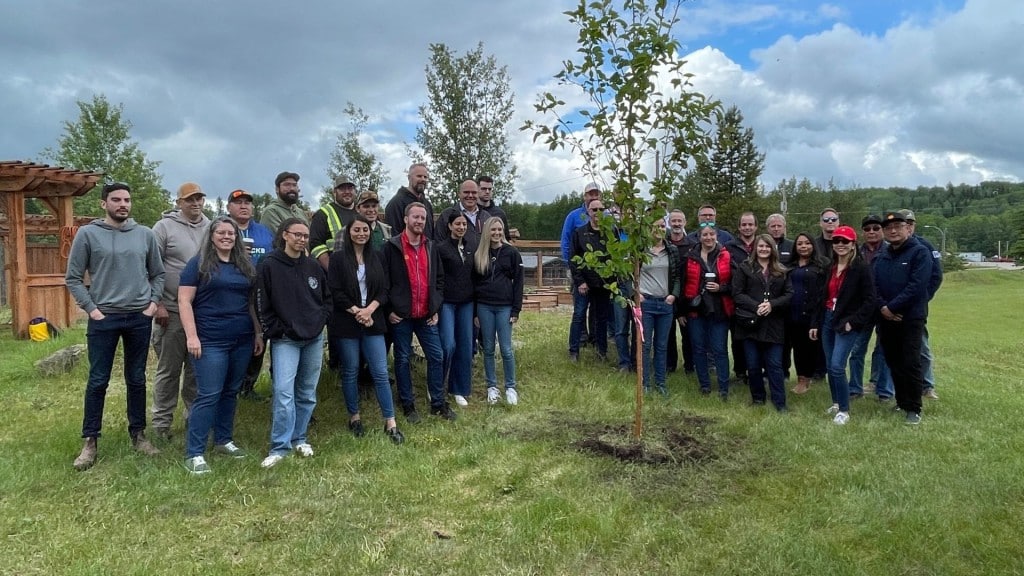
DOIG RIVER, B.C. — Members of Doig River First Nation (DRFN)’s council were joined alongside representatives of several energy companies and Project Forest for the groundbreaking of a rewilding project across 46 hectares on DRFN land.
The project will plant over 115,000 seedlings of native trees, bushes, and shrubs into a flat area on DRFN lands, located approximately 60 kilometres northeast of Fort St. John.
While attendees of the ceremony looked on, DRFN councillor Justin Davis did the honours of digging out space for a cherry tree adjacent to the band office, something he called “the cherry on top” of the project.
Local News Straight
to Your Phone
Download our app today!
Available on Android and iOS devices
Davis told energeticcity.ca that discussions for the project began in 2022 when he met current Project Forest executive director Mike Toffan, who was part of a reclamation project to restore Doig River land.
When Toffan moved to Project Forest, Davis said it was a unique opportunity to bring woodlands back to the community. Toffan and Davis presented the idea to the council, which got the ball rolling.
“We discussed what Project Forest was and what it could be,” said Davis. “This is how we came to be here today.”
According to its website, Project Forest is an Edmonton-based non-profit that recognizes the opportunity to remove carbon from the air in Canada by expanding forests and working alongside Indigenous communities.
Latest Stories
Toffan says the trails used will also beautify the land.
“The field has been flattened for decades,” Toffan said. “It was no longer used for agriculture, although we knew the community still uses the trails.”
“But we figured if we could we-establish some traditional plants onto the landscape, it could help reintroduce some of those fruits to the area.”
Consultations with the community enabled the planting of species such as White Spruce, Saskatoon, Raspberry, Strawberry, Willow, Mountain Ash, Chokecherry, and White Birch.
Species will be used for food as well as medicinal purposes, enabling a greater sense of food sovereignty, says DRFN forestry manager Sarah Rowe.
“Having the added benefit of food sovereignty is definitely culturally important to the people of Doig River First Nation,” said Rowe.
“But rewilding, bringing back more areas to a natural ecologically appropriate space is just as important.”
Several companies with ties to Fort St. John, including Pembina Pipeline Corporation, Strathcona Industries, North Shore Environmental Consultants, Liberty Energy, and Pacific Canbriam contributed funds toward the re-foresting of the area.
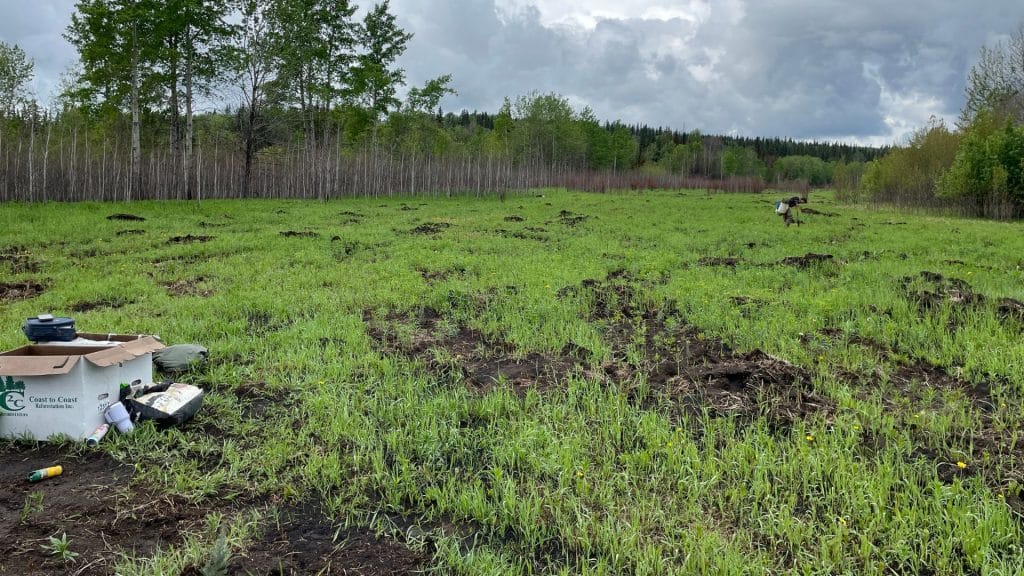
Shell Canada, which was one of the project’s largest backers, was “thrilled” to be a partner in the project with DRFN, said environmental planner for the company Julia Fletcher, adding the company’s commitment to net zero deforestation.
“It’s really important to give back, and try to have a positive impact in places we work,” Fletcher said.
Although Davis acknowledged wildfire activity in 2023 and this May affect planting, he’s excited about the future for the people of Doig River with this project.
“Some of our berry bushes were destroyed by that devastation,” said Davis. “But, with the replanting, we are hopeful that our community doesn’t have to go far to pick those plants in the future.”
To learn more about Project Forest and the Rewilding project, visit their website here.
Stay connected with local news
Make us your
home page
Authors

Related Articles
Award-winning Indigenous activist to be keynote speaker at Spark conference
Ashley Callingbull is an actress, model and First Nations activist who will make a keynote appearance at the Spark Women’s Leadership Conference in Fort St. John in 2026.
Fort St. John Métis Society looks to gather delegation for national event
The Back to Batoche Métis gathering takes place from July 16th to 19th in 2026, and the Fort St. John Métis Society is looking to send about 20 members.
Long-standing Spirit of the Peace Pow Wow president resigns
Connie Greyeyes has resigned from her position as board president of the Spirit of the Peace Pow Wow.