
Evan Saugstad: The headline read “The Reality of Canada’s New Season of Wildfire”
The assertion that our “every year” spring is going to be one of raging infernos accompanied by mass evacuations and trauma is not our history and not our every year future.
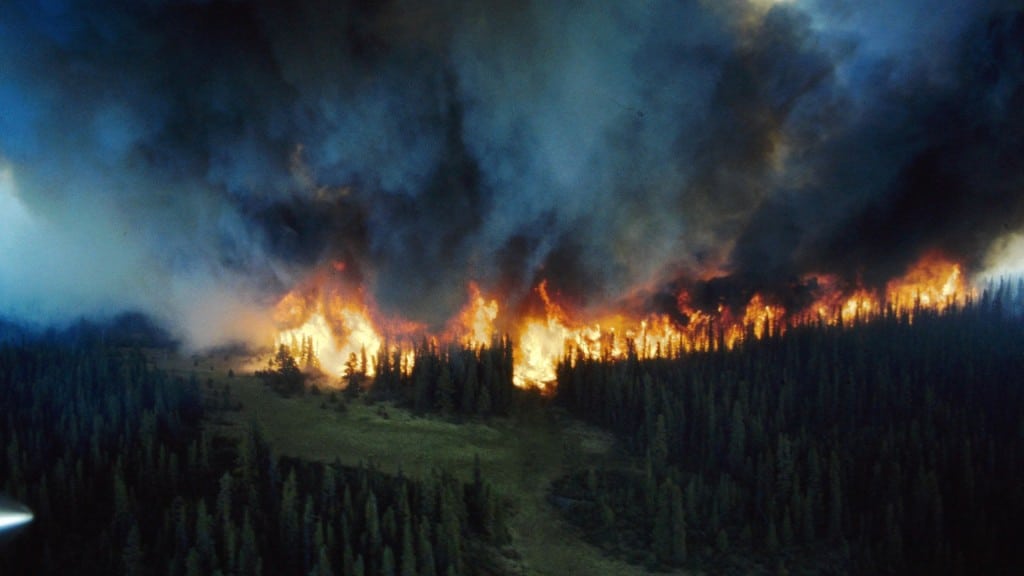
FORT St. JOHN, B.C. — Not my headline, but one that came from the Globe and Mail’s Editorial Board on May 18th.
“…..Will 2024 be a repeat? With a little luck in the weather department, it won’t go that way. But there can be no doubt we are in a new era in which massive wildfires, dramatic evacuations and compounding trauma are as reliable in spring as apple blossoms and prairie crocuses.” ….
Partly true and partly misleading. Very true that weather plays the most significant factor in determining whether we have a fire season or not. Regular rain/showers can and will suppress or minimize damages caused by wildfire, drought, or no drought. Wildfires need a specific set of circumstances to move from a small and easily controllable fire to a raging inferno that consumes everything in its path. No infernos when fuels damp fuels and/or humidities high.
Local News Straight
to Your Phone
Download our app today!
Available on Android and iOS devices
The assertion that our “every year” spring is going to be one of raging infernos accompanied by mass evacuations and trauma is not our history and not our every year future. That being said, when the conditions favour the fires, we can control and/or better manage our response and readiness that reduces the numbers, frequency and damages caused by wildfire.
Lost in the rhetoric is that the amount of forest consumed by wildfires worldwide has been on the decline for several decades (much the same for Canada excluding the past couple years). Some organizations will say the number of extreme fires is increasing, while other say not.
“At the global level, satellite data from the European Space Agency also show that wildfire activity has been trending downward in recent decades and is currently approaching its lowest level since the record began in the early 1980s.” https://www.fraserinstitute.org/article/forest-fires-truth-going-up-in-flames
Most spring fires are human caused as lightening does not play a large part in our wildfires until later in the summer when dry lightening occurs. Most spring fires are caused by human carelessness, neglect, accidents, or outright arson. We will never reduce these to zero, but a more engaged population and bigger penalties for those deliberately causing fires will help reduce the numbers.
Latest Stories
Our Emergency Management system and legislation gives communities (Regional Districts, Municipalities and First Nations) the rights and powers to declare Evacuation Alerts and Orders. They could be more controllable than one may think. Just need to rethink how Evacuation Orders and Alerts are implemented and managed.
Our most recent fires in northeast BC are part of the reason the Globe and Mail wrote this article.
The Parker Lake Fire was human caused by strong winds knocking down a powerline, something that can be mitigated, to a certain degree by regular pruning of trees along all powerlines. Can’t be entirely controlled, and when it happens as it did, on a day of high winds, warm temperatures, and dry conditions with an abundance of light and highly flammable fuels (dry spring grasses and leaves), the winds caused it to spread faster than our fire fighters could chase it, so we get what we got. Unless those responsible for maintaining the powerlines were negligent, likely no one’s fault as these types of accidents/incidents do happen.
The Doig River Fire was also human caused (not aware of what humans did nor did not do in this case), the Disher’s Corner fire west of Chetwynd earlier in the month and the Trapper Lake Fire south of Hudson’s Hope were also human caused and all resulted in Orders and Alerts.
All of these fires ignited on dry and windy days, during the second year of a drought, before the forests began turning green and the fire hazards reduced. Although we may consider ourselves lucky that more homes and businesses were not burned (sympathies to those four families in Fort Nelson who lost their homes), the initial response by our fire fighting forces managed to bring these three fires under control and the weather better cooperated in the days following ignition. As I write this on May 27th, Parker Lake is still listed as out of control.
With no disrespect to those having to declare and manage the evacuation Alerts and Orders and fight the fires in Fort Nelson (Parker Lake and Patry Creek), what has occurred to date points out the deficiencies in our wildfire and emergency management process.
After the Evacuation Order was declared for Parker Lake, our current crop of politicians in Victoria were quick to take the media and tell us about how great and responsive they were as they had sent an “Incident Management Team” to Fort Nelson a few days previously to begin work on the holdover fires from 2023. What they forgot to mention is that they had abrogated their responsibility to Fort Nelson and left all holdover fires as unmanaged until they, surprise, surprise, began to actively burn once again, and in the case of the Patry Creek Fire, now necessitating more evacuation Alerts and Orders for the community.
No mention that the best time to put these 2023 fires to bed was during this past winter when thermal imaging could have delineated where the hotspots were, and heavy equipment dispatched to dig them up and extinguish them. Yes, listening to a few Fort Nelson loggers, road builders, trappers or gas/oil contractors that are used to working in cold and frozen conditions would have told them that winter was the best time to be out on the muskeg with their heavy equipment putting them out. Instead, BC Wildfire relied on some southern management personnel that had no desire to go north for the winter and do their job. Now, unless heavy rains are part of our future, these fires will rattle around all summer, putting up lots of smoke with who knows how much they burn, making all our lives miserable until the snow flies again next fall.
BC’s current Wildfire Service is almost entirely run by one branch of government, mostly based in Regional or Provincial headquarters and dose not regularly use other government personnel who live and work in the communities. Nor do they rely on those other government workers who used to help suppress wildfire. Remember all the government employees who would disappear from their normal jobs and go help fight fire and make a bit of overtime in years gone by? Too many complaints from the public when they were not at their regular desk doing their regular job, so they got banished from being able to participate. Result, only BC Wildfire fights wildfire and there are not many of them, especially when it comes to doing anything in the offseason and as far north as Fort Nelson.
Before I get to what’s wrong with our evacuation Alerts and Orders, a bit about my background. I helped manage and fight wildfire for ten years with the Federal government’s Yukon Forest Service; six years in the bird dog aircraft directing aerial attack on wildfires from Alaska to Ontario, Manitoulin Island to Tuktoyaktuk and four as a District Duty Officer. Also spent nine years as Chetwynd’s Mayor and fully understood our emergency management legislation as it applies to communities.
Never had to implement any Orders or Alerts (did welcome Tumbler Ridge to Chetwynd when their town was evacuated) and worked on fires in hastily abandoned communities. I also spent many a day thinking about what I would do and how I would respond should such an event occur and threaten Chetwynd.
Currently communities can declare an Alert to advise their communities of an impending danger. That is good and works well as the first warning. After that it goes to a full out Order that requires all but essential personal to leave their homes and communities, basically emptying the community such has happened in Fort Nelson and Doig River. (One does not have to leave but can be arrested if they stray off their private property.) There is nothing in-between the Alert and Order but should be.
Wildfires threatening communities are not new, been happening for ever. But over the past few decades’ thing have changed. Not the fires, not all communities and depending upon which communities, not all its residents that understand wildfire and how to safely work and fight fire in a forested environment. What has changed are the liabilities (perceived or otherwise), expectations, experiences, and legislation which directly affect how communities are able to respond.
A few decades ago it used to be when a fire threatened a community the entire community became involved and responded accordingly. It was matter of survival, as the further away you were from the major cities, the fewer government services and the more communities had to rely on their own abilities, resourcefulness, and resiliency to survive. Those who were unable to help, such as the elderly, children, and infirm may have left in case efforts failed, but most of the able bodied and willing residents showed up with a piece of heavy equipment, a bucket, or shovel or saw or wet burlap sack or pair of gloves to help, and it worked. The local Forest Ranger could hire anyone and everyone to work, and if necessary, conscript extras if needed. Everyone got paid, mind you, not allot, and it worked. A lot fewer evacuations and to the best to my knowledge, no more trauma than is experienced today. Communities always had lots of firefighters to work the lines and ready their properties.
Today an Evacuation Order empties out an entire community and all that is left is maybe a few dozen firefighters try to suppress the fires and look after an entirely vacated community. Even worse in the rural farm and ranch lands of the Peace country. Declare the Order and tell ranchers and farmers they must abandon their homes, businesses, livestock, equipment, crops and whatever else and that they must trust a firefighter might show up to protect their assets – no wonder most refuse and have become very good at dodging the evacuation police and protecting their assets!!
WorkSafe rules says everyone must be trained to work, and if they aren’t and they get hurt, off with the boss’s head. A community official responsible for the community can look at the few firefighters Wildfire BC provides and decide that there are not enough resources to keep their residents safe, so they make their Order and on off most go. Making the Order is a conundrum. Don’t make the Order, and someone gets hurt, off with their heads. Make the Order and town is spared, a whole lot of complainers. And when an Order is not made, those that leave out of an abundance of caution receive no government supports, no receiving communities, no expenses covered, and so are reluctance to leave.
To most “professional” wildfire fighters, residents left behind represent an impediment and pain in the butt, so just easier to tell the local officials to get rid of them all and keep them away until they give all clear for everyone to return, as has happen in Fort Nelson and many other communities.
Highways must be closed, even though there maybe no current threat, as you cannot allow travellers to drive through have an empty town in getting to their destinations, and the list of the affected goes on and on.
What is missing is that intermediate step. One that tells those that do not or cannot help responding to the wildfire emergency and help keep the community safe, that they must leave. One that says there will be an emergency management system that will support voluntary evacuees with the appropriate reimbursement of expenses. A system that lets everyone else stay stay behind and keep the community functional, as long as possible, and safe to do so.
Case in point, Fort Nelson on May 27th . Fire started on May 11th with an Order for locally affected residents. The following day as the fire expanded an Order was made for all of Fort Nelson and the town empties out. Over two week later, with most days of no significance fire growth, the community is only now allowing all its residents to return. They had to go through a long and drawn-out process of readying the town for its resident’s return. There are options to keep a partial Evacuation Order in place which also allows funding for those unable to return, so the Order is kept in force until the very end.
Such a process return town to normal would not be necessary if most able boded persons stayed behind, not only to fight the fire directly or indirectly, but also to keep the town functioning. When the Order is over and everyone is allowed to return, the community is ready. Yes, not everything may be prefect and one could expect some inconveniences in terms of type of food, services and supports that may be available, but most residents would prefer to be back in their own homes and beds versus stuck in some hotel room miles away wondering about their homes.
Today, we accept that the ignorance of a few will dominate the knowledge and experiences of the majority. Just as 70 – 80 % of Canadians became vaccinated for COVID because they were asked to and thought it was prudent to do under the circumstances, the same holds true for evacuations.
Tell the people a fire is arriving in a few hours, and we must flee as it is beyond the communities’ capabilities to contain, and the majority will leave as fast as they can. At the same time, if the message is that a fire is coming, we have a plan and a chance to prepare, and protect the community and those that can, will stay behind and help. For those that can’t, most will leave, as that is how a community will respond to an emergency. Or the initial emergency passed and ask those able to help can come back to help and they will, while the rest can stay evacuated.
The community also needs accurate and timely public information, something that our BC Wildfire Service has struggled to understand and implement. When Tumbler Ridge evacuated to Chetwynd, I, as Mayor used to hold a daily briefing and talk to Tumbler’s residents and give them what updates I could. Not so for the Wildfire Service. They refused to show up as they wanted to be left alone to do their thing and did not care what those affected residents thought (Their current website is closer to a joke than an information centre).
That lack of timely information has continued, for the most part, until now. What is changing is the ability of local residents, such as occurred in Fort Nelson, to conduct daily live streaming updates via social media and tell the world what is going on, at least to their best ability and the knowledge they have. That effect is we now see the Incident Management team putting out better information to the community as they realize that if they don’t talk about what is happening, someone else will, and those messages may not always be correct.
Every year someone will ask for a fire review and try to make our fire suppression efforts better. Unfortunately, and despite the years past reviews, the recommendations and outcomes don’t seem to translate in making things better for those affected by fire. Yes, more firefighters and more equipment, but not much movement for more reliance on comminutes and their residents to help save themselves. Nor any impetuous to modernize Emergency Management (call it modernization but in fact, it is going back to doing things they way they used to get done), despite Emergency Management now being its own Ministry.
And finally, as to the “new” normal being more burnt or evacuated communities, not so fast. Doesn’t have to always be that way, nor will every spring be a warm and dry one. Yes, we will always have some fires in our northern boreal forests, and despite our best efforts, we will still have evacuations. And yes, if we do not change how and when we fight fires or evacuate communities, we can make the headlines of the new normal as our new normal.
Did you know the northern black spruce forests are one of the three most flammable forest in the world? Right up there with the eucalypts of Australia and chaparral in California.
Evan, and hoping that the long-term weather forecast of a cooler and damper summer are true and fire reviews are moved out of the BC Wildfire Service.
Stay connected with local news
Make us your
home page
Letters to the Editor
Letters to the Editor should be exclusive to Energeticcity.ca. Include your name, address and daytime phone number. Keep letters to 500 words or fewer. Letters may be edited for length and clarity. To submit a letter by e-mail to contact@energeticcity.ca.
Authors

Related Articles

(Opinion) ‘Replace the Taylor Bridge, B.C. can’t afford to wait’
Chris Gardner, president and CEO of ICBA, is urging the B.C. provincial government to replace the Taylor Bridge. ICBA represents more than 4,500 member companies across British Columbia and Alberta.

(Opinion) Bear Flat Dispatch: Canada geese on ice
Regular contributor Ken Boon writes on the new Site C dam and how it has impacted the gaggle of geese who move onto his property each year.

Letter to the editor: I say no beds for seniors, no fancy pool
David Blaney writes about the project to replace the North Peace Leisure Pool and the recent news that the long-term care facility in Fort St. John has been delayed by the provincial government.