
Phase three of pool replacement project focuses on community engagement and tax considerations
The Peace River Regional District has hired Mickelson Consulting Inc. to gain additional community input about replacing the North Peace Leisure Facility.
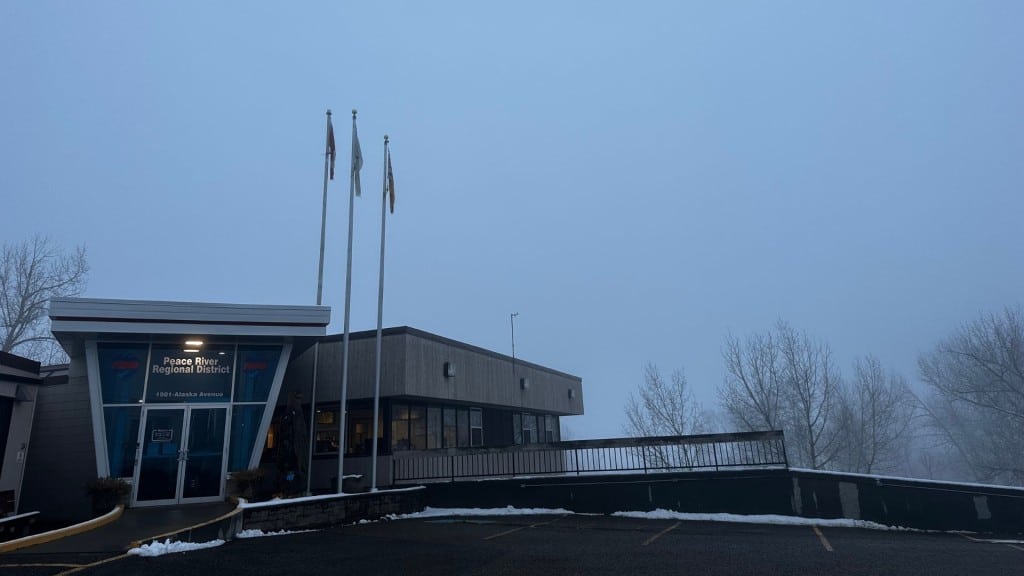
DAWSON CREEK B.C. — The Peace River Regional District has hired Mickelson Consulting Inc. to gain additional community input about replacing the North Peace Leisure Facility.
The third phase of work on the replacement project will focus on ensuring that proposed facility amenities are balanced with what residents in partner jurisdictions will accept in terms of tax increases.
The PRRD voted unanimously to pre-approve the project’s operating budget and award the request for proposal to the consulting company at a January 25th committee of the whole meeting.
Mickelson was awarded the contract for a one-year term for $295,635.
According to a report to the directors, the procurement process was not based on the lowest bidding price but on the highest-ranked criteria, which included an understanding of the project, experience and qualifications, pricing, and more.
The directors awarded the contract to Mickelson because the company had the highest criteria evaluation, according to the project steering committee.
A feasibility study was conducted in 2023 to outline the best opportunities to replace the aging facility and accommodate the growing population. The new engagement work looks to build off the initial study.
Latest Stories
The current North Peace Leisure Pool has caused much frustration in the community due to numerous closings and repairs.
The City of Fort St. John and the District of Taylor have been working together since 2018 to explore options for the proposed North Peace Leisure Facility.
The process to determine the facility’s future has taken a long time to complete, causing further frustration, as City of Fort St John Mayor Lilia Hansen pointed out during the discussion.
“It’s very frustrating how long this process is taking to build a replacement pool, and residents, as well as staff, are also frustrated that engagement hasn’t moved this project too long,” said Hansen.
Phase three of the project has four stages. The first includes bringing communities up to date with the project status and assessing what has been learned from community engagement.
Stages two and three focus on gaining insight into the facility configuration and what residents in partner jurisdictions will accept tax increases.
Stage four focuses on providing information to the jurisdictions and the board that can be supported in a referendum.
“We definitely need to get to a referendum, and if this is how we can do it, then I’m in support,” said Hansen.
The full report can be viewed below:
Stay connected with local news
Make us your
home page
Authors

Related Articles
Dawson Creek Business Facade Program opens for grant applications
The City of Dawson Creek is looking for applications from local businesses for its 2026 Business Facade Program and the deadline for the first intake is May 1st.
Closure of Site C workers camp fast approaches as future of structures remains uncertain
The workers camp adjacent to BC Hydro’s hydroelectric dam Site C is set to close on March 31st, but the organization is “confident” it will be able to repurpose as many assets as possible.

The great potato giveaway: Métis society looks to distribute 55,000 lbs of potatoes
Some 55,000 lbs of potatoes were given to the Fort St. John Métis Society through the Second Harvest program.